Guides Interiors
Which paint sheen to use in each room
Sheen changes how a color looks, how well a wall hides flaws and how easy it is to clean. Here is how to choose it room by room.
Updated September 2026
Quick answer
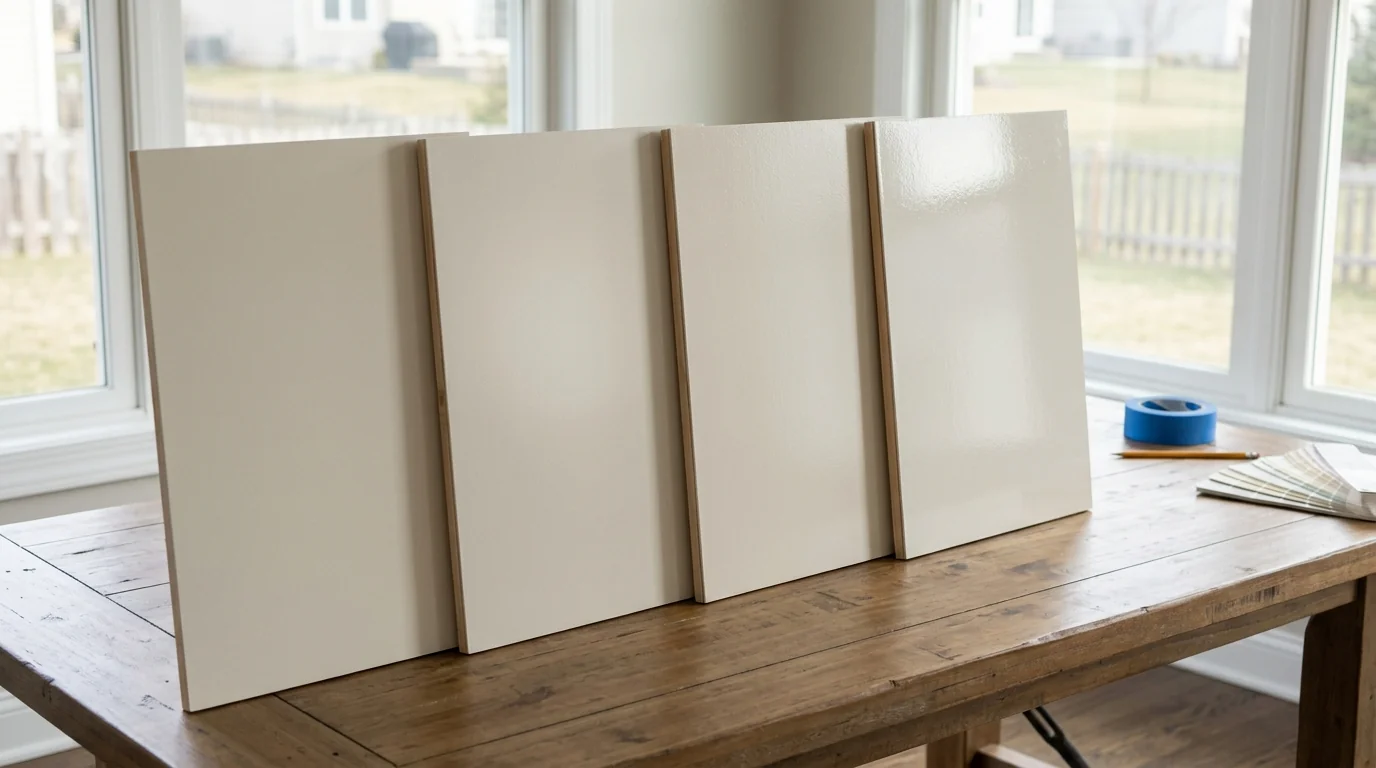
As a rule, use flat on ceilings, matte or eggshell on living room and bedroom walls, satin in kitchens, bathrooms, hallways and kids' rooms, and semi-gloss or a hard enamel on trim, doors and cabinets. Higher sheens clean more easily but show wall flaws more; lower sheens hide flaws but mark more easily.
What sheen actually changes
Sheen is how much light a dried paint reflects. Flat and matte reflect very little, so they hide bumps, patches and roller marks well. As sheen rises through eggshell, satin and semi-gloss, the finish gets harder and easier to wipe, but it also shows every flaw in the wall.
Sheen also shifts color. The same paint can look slightly darker and richer in a higher sheen, so always sample in the sheen you plan to use.
Ceilings
Ceilings almost always look best in flat. It hides seams and patches, does not glare under lights and does not show roller laps from below. Bathroom ceilings can go a step up to a matte or eggshell made for humid rooms.
If your ceilings are stained or yellowed, see ceiling painting; stains need a sealing primer before any finish, whatever the sheen.
Living rooms, bedrooms and dining rooms
These rooms take less wear, so matte or eggshell is the usual choice. Modern washable matte finishes give a soft, velvety look and still clean reasonably well, which suits living rooms with large walls and strong window light.
Eggshell is a safe middle ground if you want a touch more washability. In older homes with plaster or uneven drywall, lower sheens are kinder to the wall.
Want this handled for you?
Call (630) 389-8505 any hour and we will book a walkthrough.
Call (630) 389-8505Kitchens, bathrooms, hallways and kids' rooms
Rooms that get splashed, handled or bumped need a finish you can wipe. Satin is the usual choice for kitchen and bathroom walls, stair halls, mudrooms and children's rooms; it cleans well without the glare of semi-gloss.
In bathrooms with showers, use a paint made for humid rooms with a mildewcide, and run the fan. See interior painting for how we prep these rooms.
Trim, doors and cabinets
Baseboards, casings and doors take scuffs from shoes, vacuums and hands, so they get satin or semi-gloss in a hard enamel. Semi-gloss gives a crisp contrast with matte walls; satin is softer and hides small imperfections better.
Cabinets need a dedicated cabinet enamel rather than wall paint, usually in satin. Our cabinet painting page explains why the product matters as much as the sheen.
When to break the rules
Dark colors in high sheens show every flaw, so deep accent walls often look best in matte. On the other hand, a high-gloss lacquer on a dark front door or a library's built-ins can be striking, as long as the surface underneath is perfectly smooth.
If you are unsure, sample two sheens side by side on the wall. Our color consultation covers sheen as well as color.
FAQ
Questions homeowners ask
Flat or matte; they reflect the least light.
Satin cleans better and suits busy hallways; eggshell is fine for quieter ones.
You can, but trim and wet rooms last longer in a higher sheen.
Usually satin in a cabinet enamel, not wall paint.
Yes; higher sheens can make the same color look a little darker and richer.
Satin on the walls, with a paint made for humid rooms.
Keep reading
Related services and guides
Interior Painting
Our interior painting page: scope, pricing factors and timing in Naperville.
Learn moreTrim, Baseboard & Door Painting
Our trim, baseboard & door painting page: scope, pricing factors and timing in Naperville.
Learn moreColor Consultation
Our color consultation page: scope, pricing factors and timing in Naperville.
Learn morePainting a home in the Naperville Historic District
Older houses around downtown bring plaster, old wood, lead-era paint and local guidelines. How to plan a paint job that respects all of them
Learn moreSigns your exterior paint is failing
Paint rarely fails all at once. What each sign means, which ones are cosmetic, and which ones mean water is already getting in.
Learn moreShould you paint or replace oak kitchen cabinets?
Most 1980s and 1990s oak kitchens in Naperville have sound boxes and dated finishes. How to decide between paint, a new stain, or new cabine
Learn moreTalk to a painter in Naperville
One number for both offices, answered 24 hours a day.
Call (630) 389-8505Calls answered 24 hours a day, 7 days a week.