Exterior Painting Naperville, IL
Exterior wood rot repair for Naperville homes
Soft sills, rotted trim ends and split siding boards replaced or rebuilt with epoxy, then primed so the new paint has something sound to hold.
- Calls answered 24/7
- Replace or epoxy repair
- Primed and ready for paint
Quick answer
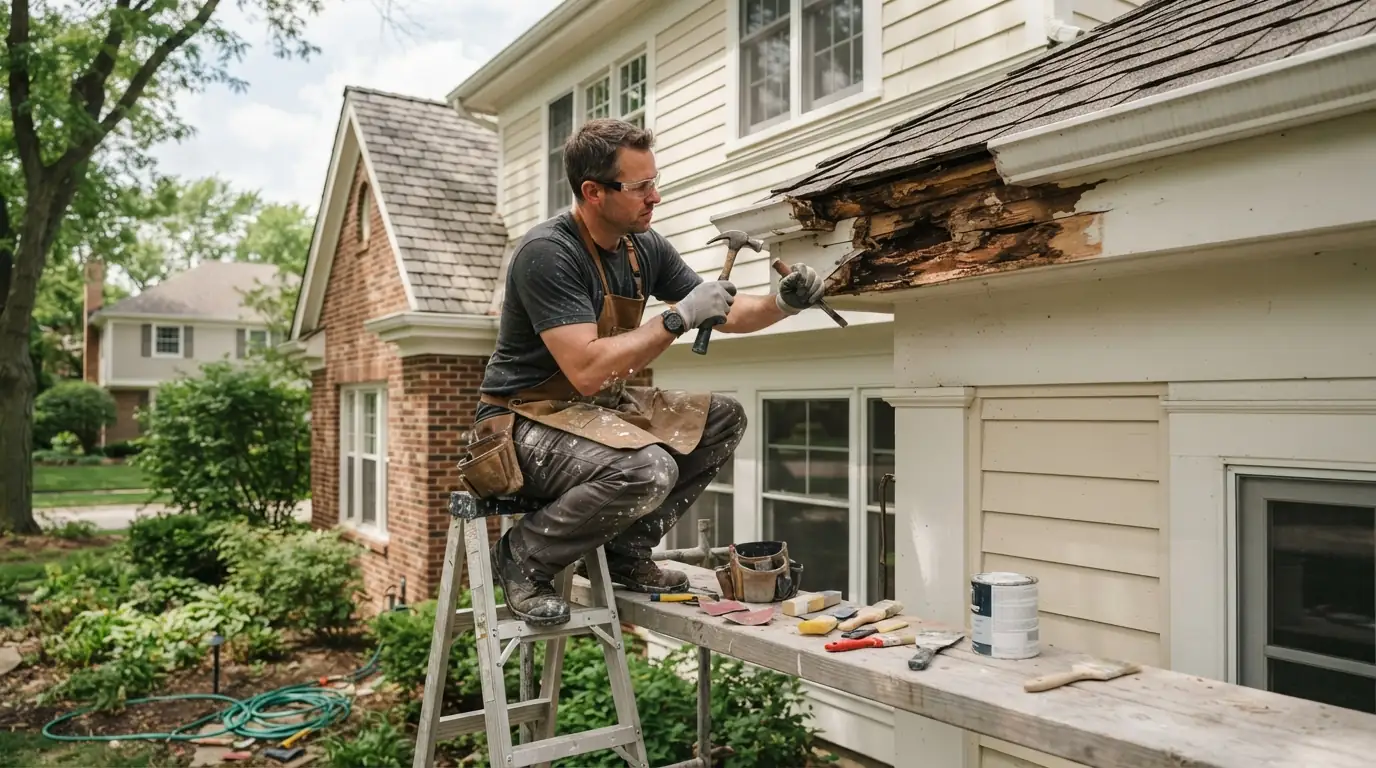
Exterior wood rot repair in Naperville usually means window sills, the bottom of door casings, fascia ends and the lowest siding courses, where water sits longest. Small soft spots are dug out and rebuilt with a two-part epoxy; larger sections are cut out and replaced with primed wood or PVC. Every repair is primed before painting. Call and point us at the soft spots.
What the job involves
Painting over rot only hides it for one season
Rot starts where water sits: the horizontal top of a sill, the end grain at the bottom of a casing, the lowest board above a patio. The paint cracks, water gets in, the wood stays wet and fungus does the rest. A fresh coat over soft wood looks fine in May and splits by the next spring.
We probe every suspect area during the exterior walkthrough, list each repair separately on the estimate, and fix it before the painters prime. Where the damage is small we rebuild with epoxy so the original profile survives; where it runs deep we replace the piece.
Updated September 2026
Types of work on this page
The 3 versions of this job we get asked for
Rotted trim and sills
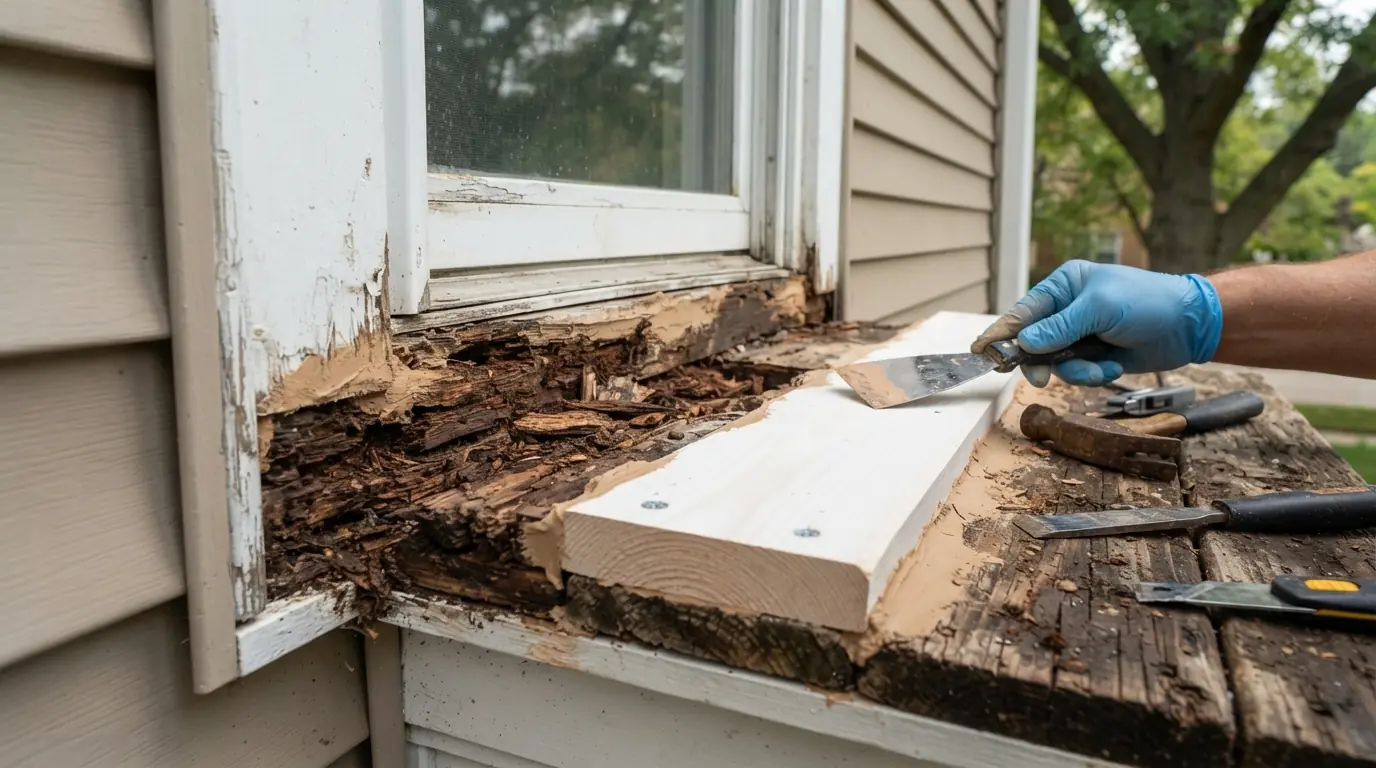
Window sills and the bottom six inches of door and window casings take the most water on a Naperville house. We probe with an awl to find where sound wood starts, cut back to it, and either splice in a new section of primed pine or a cellular PVC piece that will never rot again, glued and fastened with stainless screws. Every cut end is primed before installation, which is the step that decides whether the repair lasts. Joints are then caulked with a paintable elastomeric and the whole piece primed with the rest of the house.
Siding board replacement
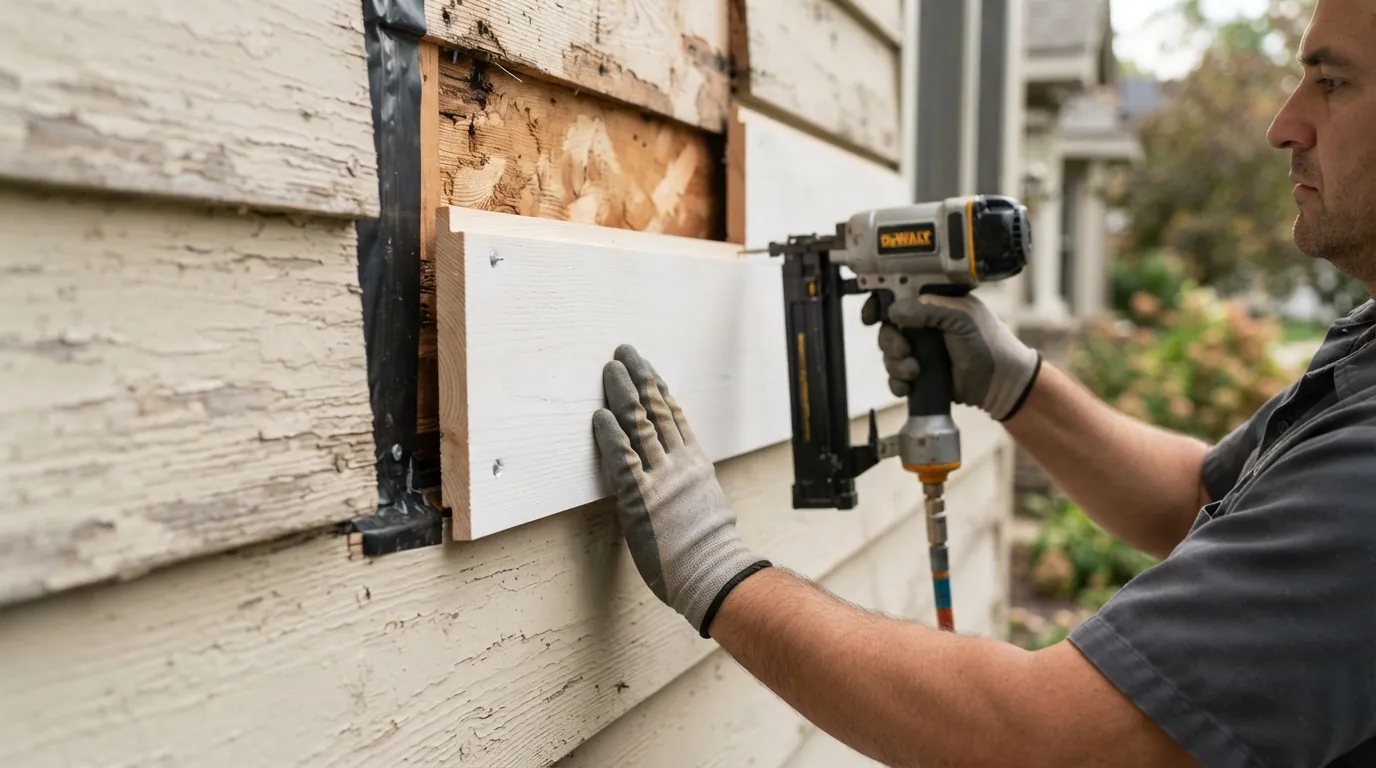
A single soft or split clapboard, usually near a downspout, a patio or the bottom course, can be replaced without touching the rest of the wall. We unzip the damaged board, check the sheathing and house wrap behind it for water damage, replace any flashing that failed, and fit a new board primed on all six sides before it goes up. On cedar houses we match the profile and exposure; on fiber cement we use the matching product. The new board gets spot-primed and painted with the rest of the elevation.
Epoxy consolidation
When rot is shallow or the piece is hard to replace, such as a molded sill, a historic casing or a curved trim, two-part epoxy saves the original. We dig out the soft wood, soak the edges with a liquid consolidant that hardens the fibers, then fill with an epoxy putty that is shaped, sanded and primed like wood. It moves with the surrounding wood through freeze and thaw and takes paint normally. It is slower than replacement per inch, so it is used where keeping the original profile matters.
What moves the price
What decides the cost of this job
Pricing comes from a walkthrough of the actual surfaces.
- Number of repairs. Each sill, casing or board is listed and priced separately.
- Replace or epoxy. Epoxy is slower per inch but keeps original profiles.
- Material. Cellular PVC replacements cost more than pine but will not rot.
- Hidden damage. Soft sheathing or failed flashing behind a board adds work.
- Height and access. Fascia and second-story trim need ladders or staging.
- Painting afterward. Repairs are primed; finish painting is part of the exterior job.
Local conditions
Exterior Wood Rot Repair around Naperville
In the Naperville Historic District the trim on many homes predates 1927, and replacing a molded sill or porch detail with stock lumber changes the look the district guidelines protect, so epoxy consolidation is often the better repair there. On the 1980s and 1990s subdivision houses the rot usually starts at the bottom of cedar trim and garage door jambs, after years of the roughly hundred annual freeze nights the Chicago area sees.
Step by step
How the job runs from the first call to the last coat
Probe and mark
Every soft spot found with an awl and marked on the estimate.
Cut back to sound wood
Rot removed until the wood resists the probe.
Check behind
Sheathing, wrap and flashing inspected where boards come off.
Repair
Splice, replace or epoxy-rebuild as marked.
Prime every surface
All cut ends and new pieces primed before and after install.
Caulk
Joints sealed with a paintable elastomeric.
Paint
Finished with the rest of the exterior.
Do it yourself or call us
Filling rot yourself versus having it repaired
Hardware-store wood filler is tempting on a soft sill. It usually fails because the rot is still underneath.
| Factor | Doing it yourself | Hiring us |
|---|---|---|
| Small cosmetic cracks | Filler and paint can work on sound wood | Same, plus we check the wood behind it |
| Soft sills and trim ends | Filler over rot falls out in one winter | Rot cut back to sound wood, then replaced or epoxied |
| Siding boards | Hard to remove one board without damaging others | Unzipped cleanly, wrap checked, board primed all sides |
| Finding the cause | Easy to miss the flashing or drip edge | Cause pointed out so the repair lasts |
Want a real date for exterior wood rot repair?
Call (630) 389-8505 any hour. Tell us the rooms or the elevation and we will book the walkthrough.
Call (630) 389-8505FAQ
Questions about exterior wood rot repair in Naperville
Push a screwdriver into it. If it sinks in easily or the wood feels spongy, it is rot. Peeling paint that keeps coming back on a sill is the usual first sign.
Replace when the rot is deep or the piece is plain stock. Epoxy when the damage is shallow or the profile is special and hard to reproduce.
Where it makes sense, yes. Cellular PVC does not rot and paints well; it is a good choice for sills and bottom trim that sit in water.
Yes, as a stand-alone job. The repaired area is primed and painted to match, though an exact color match on faded paint is not always possible.
We stop and show you. Sheathing or framing damage is a carpentry repair and is quoted separately before we continue.
Water is still getting there: a missing drip edge, a failed flashing or a gutter overflow. We point out the cause so it can be fixed.
Book exterior wood rot repair in Naperville
One number, both offices, answered around the clock. The estimate is a walkthrough, not a guess.
Call (630) 389-8505Calls answered 24 hours a day, 7 days a week.