Cabinets & Woodwork Naperville, IL
Interior wood staining and clear coats in Naperville
Trim, doors, beams and built-ins stained to match what is already in the house, then sealed with a clear coat that holds up to hands, pets and sunlight.
- Calls answered 24/7
- Color-matched stain
- Sprayed or brushed clear coats
Quick answer
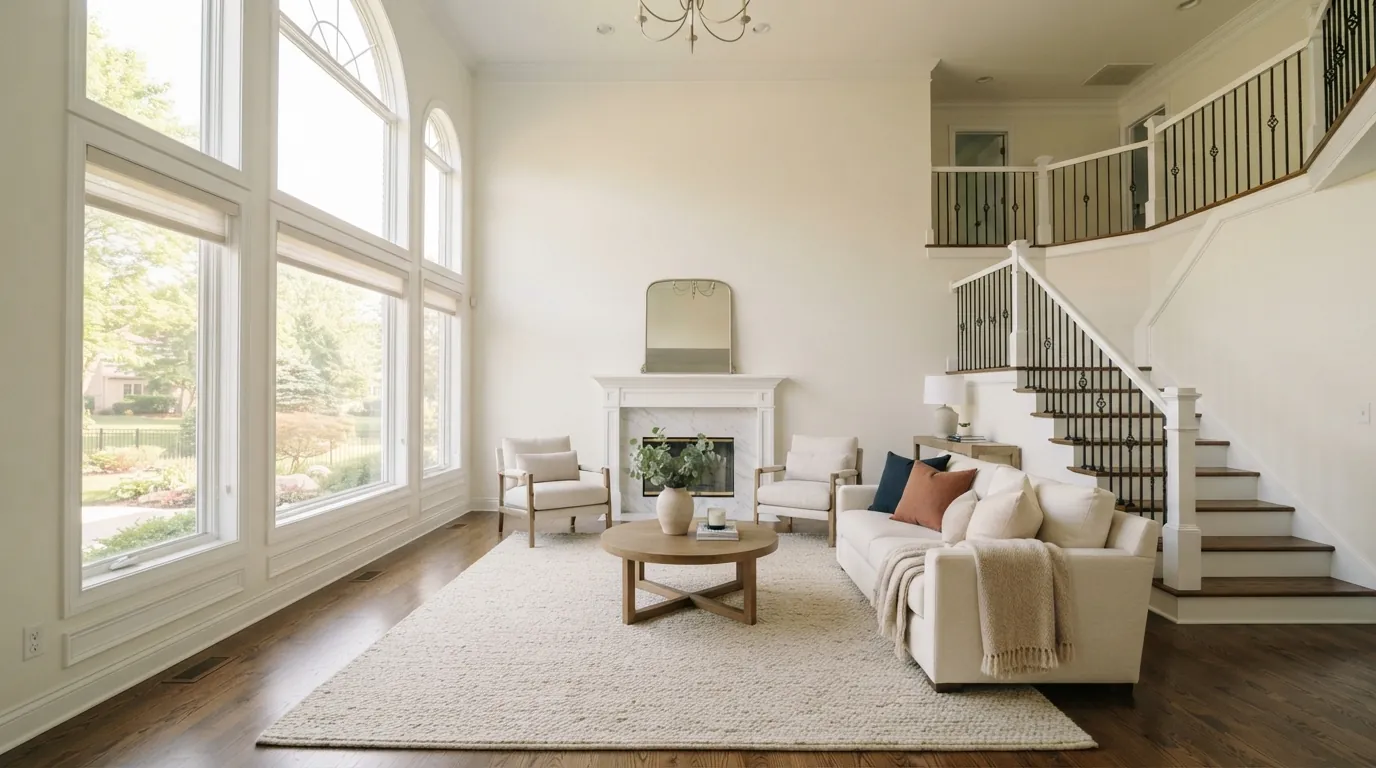
Interior wood staining in Naperville is mostly matching: new trim to the old, a replaced door to the rest of the hall, or a whole run of faded oak brought back to one even tone. We sample on the actual wood, build the color in layers where needed, and finish with a waterborne or oil-modified clear coat. Call and we will look at the wood first.
What the job involves
Stain is a color decision made on the wood, not on a chip
The same stain looks different on oak, maple, pine and poplar, and different again on wood that has been in sunlight for twenty years. So every staining job starts with a test on the actual board, often a hidden piece of trim, and a color built from a base stain plus a toner or glaze until it matches the finish next to it.
Once the color is right, the clear coat decides how long it lasts: a waterborne finish that will not amber, or an oil-modified one for the warm glow of older oak.
Updated September 2026
Types of work on this page
The 3 versions of this job we get asked for
Trim and doors
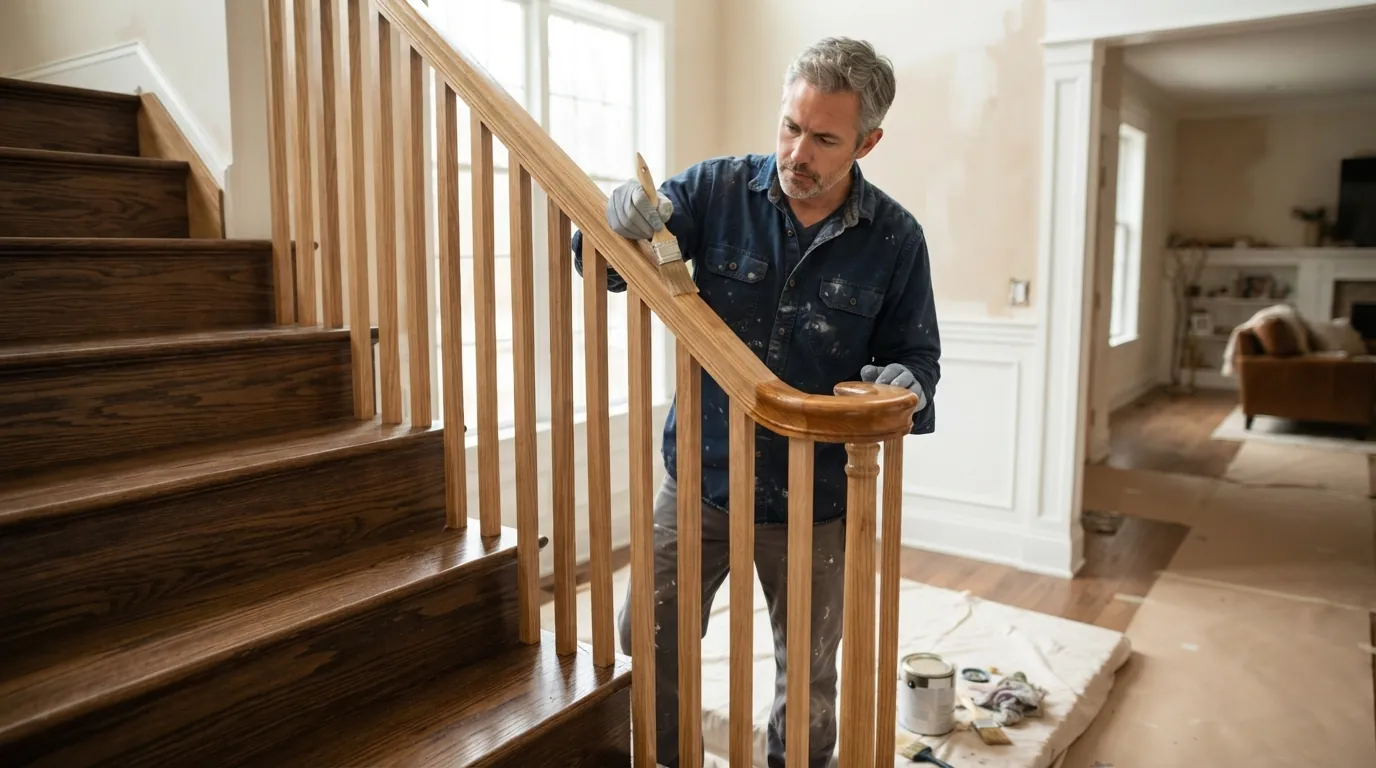
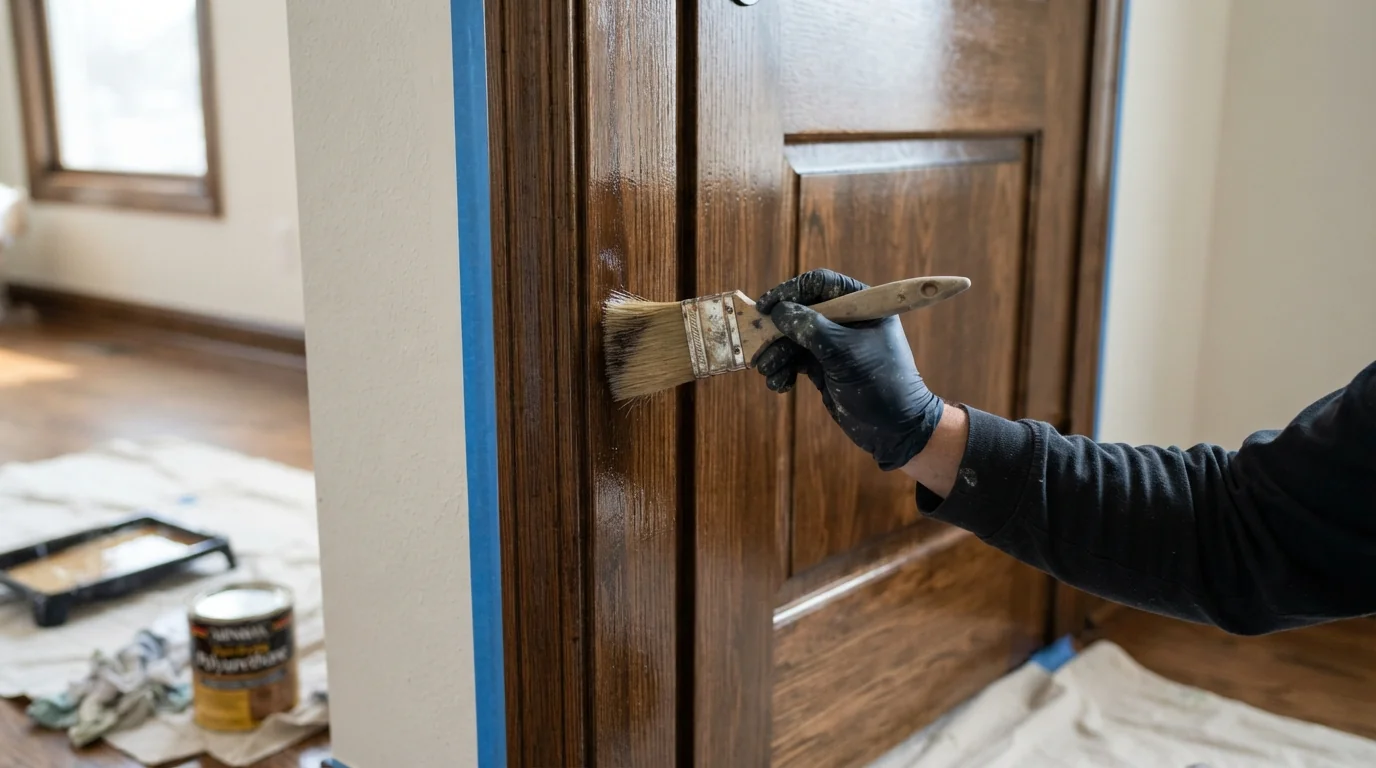
Matching new baseboard or casing to thirty-year-old oak is the most common staining call we get. New wood takes stain darker and more blotchy than aged wood, so we condition softwoods, test on offcuts, and often build the color in two passes with a toner coat to kill the orange that fresh oak shows. Existing trim with a worn or scratched finish gets cleaned, scuffed, touched in with a stain marker or glaze, and recoated rather than stripped back to bare wood.
Beams and ceilings
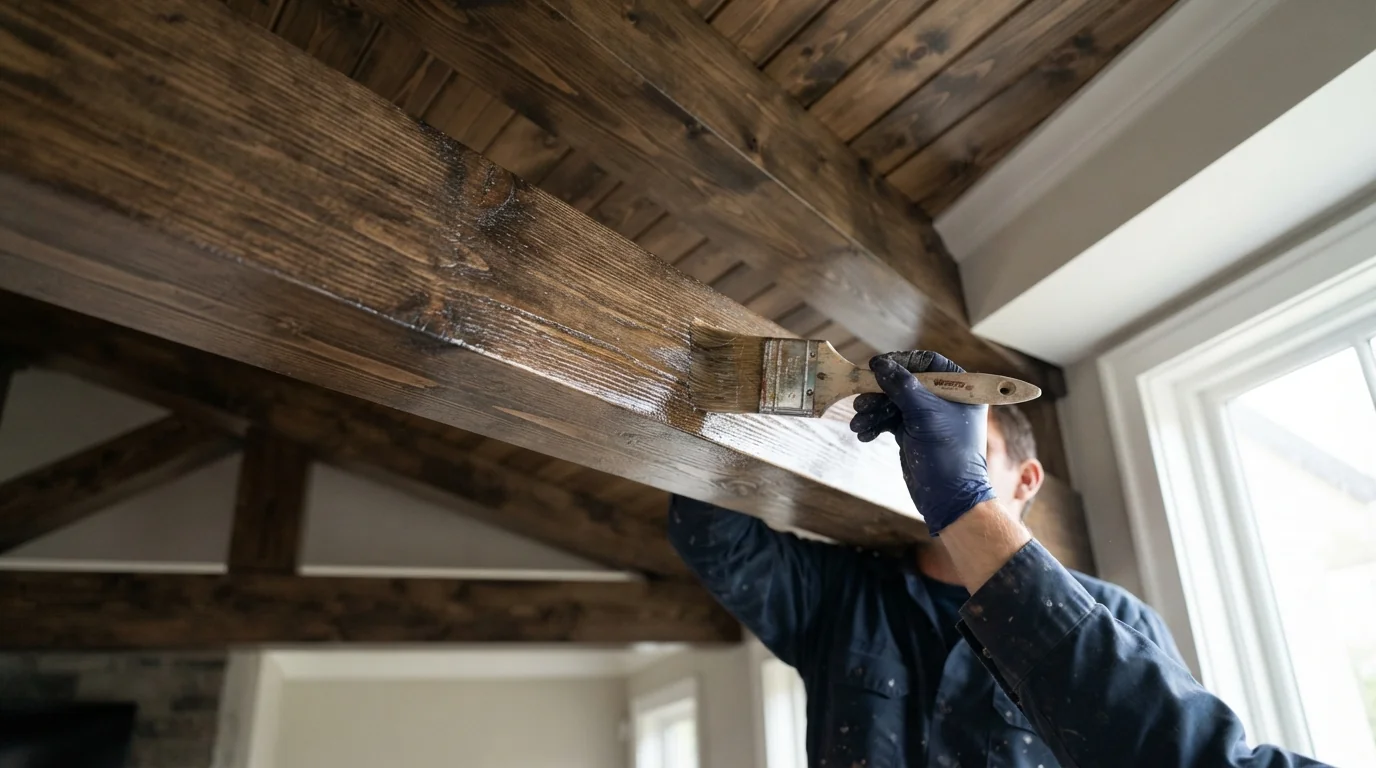
Stained ceiling beams, tongue-and-groove ceilings and wood-clad vaults need staging and a slower hand because the stain has to be wiped evenly at arm's length overhead. Faux beams made from pine or poplar take a gel stain better than a penetrating one, since the gel sits on the surface and hides the difference in grain between the boards on each beam. Clear coats overhead are sprayed and then back-brushed by hand to avoid lap marks that show under raking light from windows.
Color matching existing stain
When a room has been remodeled, a stair replaced, or a single door swapped, the new wood has to disappear into the old. We match by building layers: a base stain close to the target, a dye or toner to adjust the undertone, and sometimes a glaze to add depth, all under the final clear. Each layer is judged in the room's own light, because a sample that matches under the shop light can read red or green at home. You approve the sample board before anything goes on the installed wood.
Choosing between the options
Waterborne or oil-modified clear coat
The topcoat changes how the stained wood looks as much as the stain does.
| Clear coat | Color over time | Dry time | Best for |
|---|---|---|---|
| Waterborne polyurethane | Stays clear | Fast, same-day recoat | Trim next to white walls, light woods |
| Oil-modified polyurethane | Warms and ambers | Slower, next-day recoat | Oak, cherry, traditional rooms |
| Lacquer or conversion varnish | Stays clear to slight warm | Very fast, sprayed | Doors and built-ins done off site |
What moves the price
What decides the cost of this job
Pricing comes from a walkthrough of the actual surfaces.
- Linear feet and door count. Trim is priced by run length, doors per slab and side.
- Match difficulty. A custom toner or glaze adds sample time and layers.
- Wood species. Pine and poplar need conditioning to avoid blotch.
- Strip or scuff. Stripping a failed finish takes far longer than scuffing a sound one.
- Height and access. Beams and vaulted ceilings need staging.
- Clear coat type. Oil-modified finishes need longer dry time between coats.
Local conditions
Interior Wood Staining & Clear Coats around Naperville
The 1980s and 1990s houses that make up most of Naperville were trimmed in red oak with a light honey stain under a builder-grade clear, and thirty years of sun from big south-facing windows has turned much of it amber and uneven from room to room. That is why so much of our staining work here is matching and evening out rather than changing color, and why new additions to those homes nearly always need a custom toner to blend in.
Step by step
How the job runs from the first call to the last coat
Look and test
We check the species, the existing finish and test on a hidden spot.
Sample board
The color is built on matching wood and approved in the room.
Protect
Floors, walls and fixtures masked; doors removed.
Prep
Clean, scuff or strip; condition softwoods.
Stain
Applied and wiped evenly, toned where the match needs it.
Clear coats
Two to three coats, sanded between.
Rehang and inspect
Doors rehung and hardware refitted; you check the match with us.
Timeline
How long a staining job takes
A hallway of trim and four doors is usually two to three days: a day for prep and stain, then clear coats with dry time between. Color matching adds time up front, since the sample board is approved before any installed wood is touched. Oil-modified finishes add a day compared with waterborne.
Want a real date for interior wood staining & clear coats?
Call (630) 389-8505 any hour. Tell us the rooms or the elevation and we will book the walkthrough.
Call (630) 389-8505Brands we apply
FAQ
Questions about interior wood staining & clear coats in Naperville
Nearly always. We build the color on a sample board in layers until it disappears next to the old trim in your room's light.
Fresh oak has not aged. A toner or glaze layer knocks the orange back so it reads the same as wood that has been in sunlight for years.
Oil-based and oil-modified finishes amber with age; waterborne finishes stay clearer. We choose based on whether you want warmth or no color shift.
Before, ideally. Doors are finished flat so the clear coat levels without runs, then hung and adjusted.
If the finish is sound, yes: clean, scuff, color in the worn spots and recoat. Only failed or sticky finishes need stripping.
Waterborne clear coats are dry to touch in hours and usable the next day; oil-modified finishes need a day or two between coats.
Related work
Other cabinets & woodwork jobs we do
Book interior wood staining & clear coats in Naperville
One number, both offices, answered around the clock. The estimate is a walkthrough, not a guess.
Call (630) 389-8505Calls answered 24 hours a day, 7 days a week.