Repairs & Prep Naperville, IL
Plaster repair for Naperville's older homes
Real plaster fixed as plaster: re-anchored to the lath, cracks bridged, and skimmed flat so the wall reads as one surface again.
- Calls answered 24/7
- Cracks, loose plaster and skim coats
- Lead-safe practices on pre-1978 walls
Quick answer
Plaster repair in Naperville's older homes is usually one of three jobs: a crack that keeps coming back, a section that has come loose from the lath and sounds hollow, or a whole wall that needs skimming flat. Each is fixed differently, and a repaint without the repair fails within a season. Call and describe what you see; we will tell you which one you have.
What the job involves
Three plaster problems, three different fixes
Plaster fails in stages. First hairline cracks follow the lath lines and the corners of doors. Then the keys, the plaster that squeezed between the lath strips when the wall was built, break and the sheet loosens and bulges. Left alone, the loose section falls. Each stage has a proper repair, and none of them is a tube of caulk and a coat of paint.
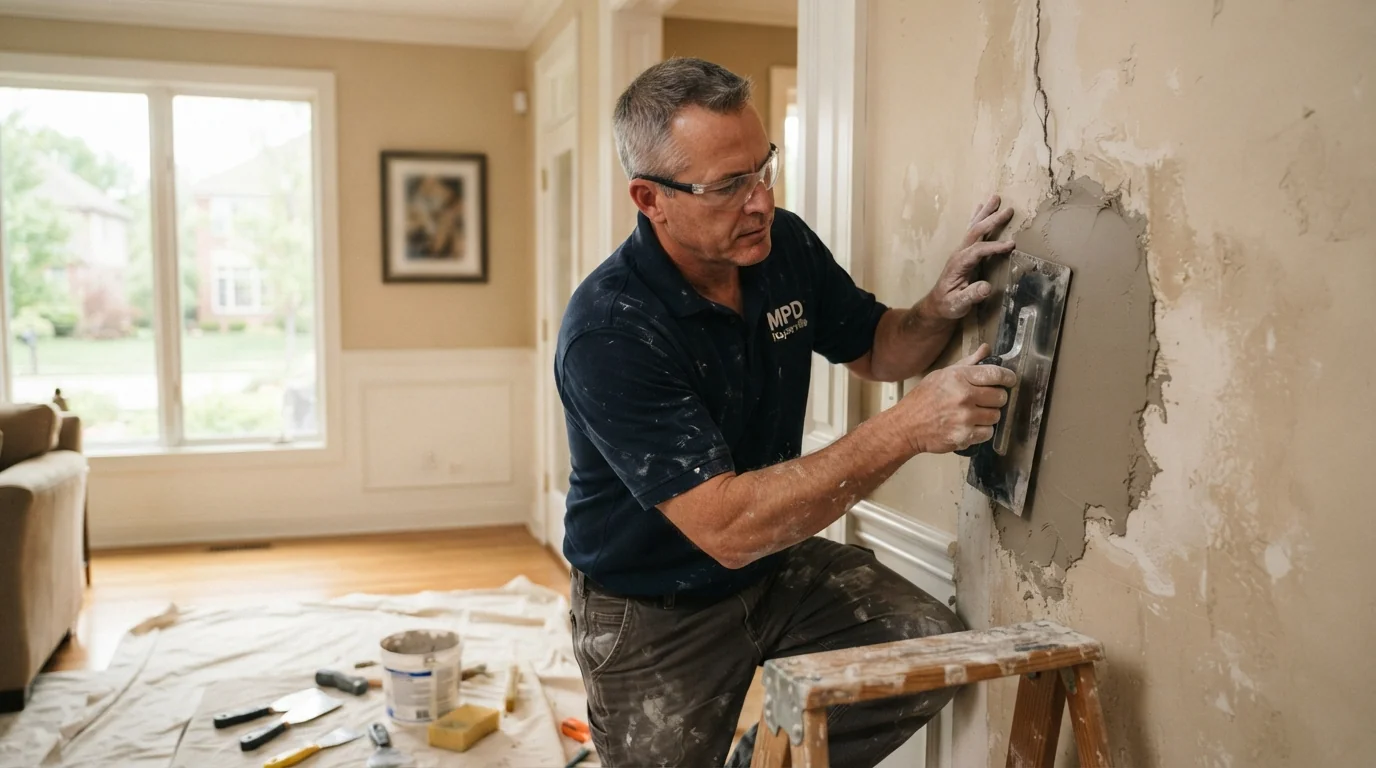
We diagnose by tapping and by looking at the crack pattern, then re-anchor loose plaster with adhesive and washers, bridge cracks with mesh and setting compound, and skim the repaired area or the whole wall so the light does not find the patch. The painting that follows is a separate step and usually the easy part.
Updated September 2026
Types of work on this page
The 3 versions of this job we get asked for
Cracks and keys
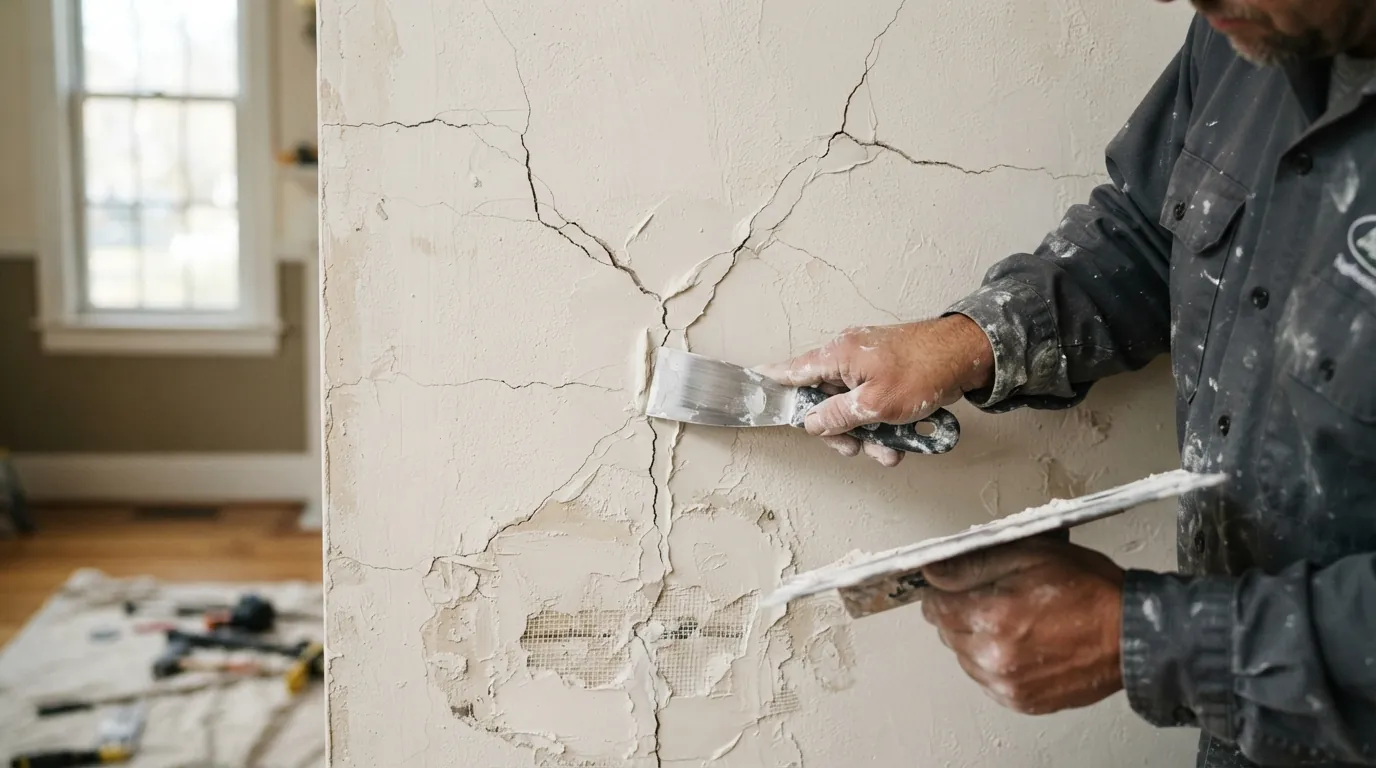
A crack that reappears every winter is usually movement, not a bad patch. We open the crack slightly, check whether the plaster on either side is still keyed to the lath, and if it has let go we pull it back tight with plaster washers and screws or inject an acrylic adhesive behind it. The crack is then bridged with fiberglass mesh and two coats of setting-type compound, which does not shrink the way ready-mix does. A hollow-sounding area around a crack means the keys are broken and the repair has to cover the loose zone, not just the line.
Skim coats
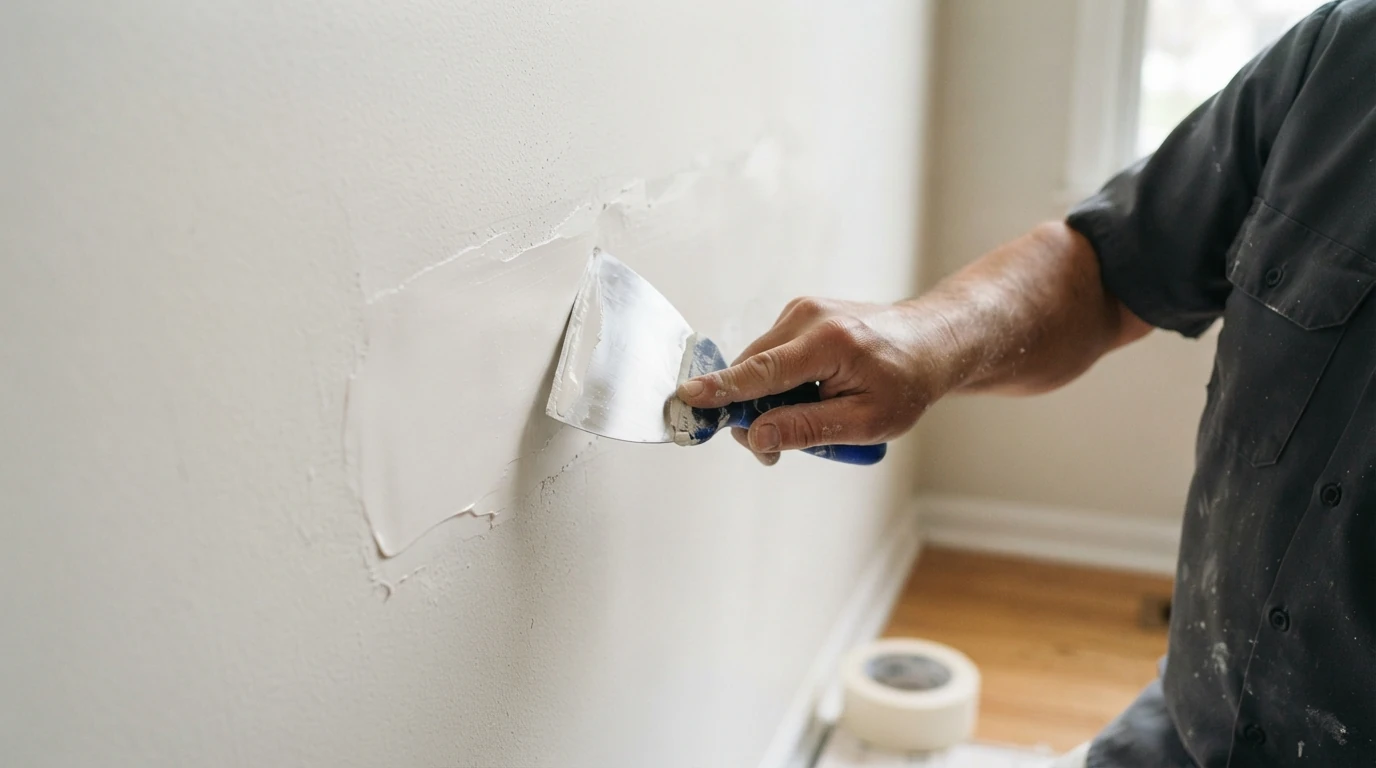
When a wall has dozens of old patches, alligatored paint or a texture someone added in the 1970s, the honest fix is a skim coat over the whole surface. We scrape and sand the high spots, prime with a bonding primer so the new coat grips old paint, then trowel two thin coats of compound or veneer plaster and sand flat. The result is a wall that takes paint like new drywall but keeps the mass and sound-deadening of the original. Ceilings can be skimmed the same way, which is often cheaper than replacing them.
Lead-safe practices on pre-1978 walls
Homes built before 1978 may carry lead in older paint layers, and about two thirds of homes built between 1940 and 1960 do. Federal rules require paid work that disturbs those layers to follow lead-safe practices: plastic containment, wet sanding or HEPA-attached sanding, no open flame, and a proper clean-up before the room is handed back. We plan plaster work in those houses around containment rather than treating it as an afterthought, and we tell you at the walkthrough when the age of the house changes the method.
What moves the price
What decides the cost of this job
Pricing comes from a walkthrough of the actual surfaces.
- Extent of loose plaster. Re-anchoring a whole wall costs more than bridging one crack.
- Skim versus patch. Skimming an entire wall is more labor but hides every old repair.
- Ceiling work. Overhead skimming needs staging and takes longer per square foot.
- Lead-safe containment. Pre-1978 rooms need plastic, HEPA sanding and clean-up time.
- Ornamental plaster. Cornices and medallions are hand-run and priced separately.
- Repainting. Painting after the repair is quoted as its own line.
Local conditions
Plaster Repair around Naperville
The plaster calls come from the streets around downtown Naperville, where houses along North Avenue and Webster Street date from the 1920s through the 1950s, and from the Naperville Historic District, whose listed homes run back to the 1870s. Those walls are lime or gypsum plaster over wood lath, so a repair has to respect the lath spacing behind it and the trim reveals around it, rather than hiding everything under new drywall.
Step by step
How the job runs from the first call to the last coat
Inspection
We tap the walls, map the loose areas and check the house age.
Containment
Floors and openings sealed; lead-safe setup where the age requires it.
Re-anchoring
Loose plaster pulled tight to the lath with washers or adhesive.
Crack bridging
Mesh and setting compound over every crack and washer.
Skim coat
Two thin coats troweled over the repair or the full wall.
Sanding and priming
Sanded flat, dust removed, sealed with a plaster primer.
Paint or hand-back
Painted by us or left primed and ready for your painter.
Do it yourself or call us
What a homeowner can safely do on plaster, and what they should not
Small cosmetic cracks in a post-1978 room are a fair weekend job. Loose plaster, ceilings and anything in an older house are not.
| Factor | Doing it yourself | Hiring us |
|---|---|---|
| Hairline cracks, sound plaster | Mesh tape and setting compound work if you feather wide | Same method, faster, and we check the keys first |
| Loose or bulging areas | Patching over loose plaster fails within months | Re-anchored with washers or adhesive before any patch |
| Ceilings | Overhead compound is hard to control and heavy to sand | Staged, skimmed and sanded flat |
| Pre-1978 rooms | Dry sanding old paint spreads lead dust | Containment, wet or HEPA sanding, proper clean-up |
Want a real date for plaster repair?
Call (630) 389-8505 any hour. Tell us the rooms or the elevation and we will book the walkthrough.
Call (630) 389-8505FAQ
Questions about plaster repair in Naperville
You can, but you lose trim reveals and add weight; a skim coat keeps the original wall and is usually cheaper on a room that is mostly sound.
Because the plaster behind them is loose. Patching the line without re-anchoring the sheet just moves the crack a few inches.
It can be if the paint layers contain lead. That is why pre-1978 rooms are sealed and sanded with HEPA extraction rather than dry-sanded open.
Yes. Sagging ceilings are re-anchored from below with washers and skimmed; badly failed ones are sometimes better replaced, and we will say which.
Sand-float and swirl finishes can be matched on a patch; a whole wall is usually skimmed smooth unless you want to keep the texture.
Setting compound cures in a day; a full skim coat wants two to three days of dry time before primer in humid summer weather.
Book plaster repair in Naperville
One number, both offices, answered around the clock. The estimate is a walkthrough, not a guess.
Call (630) 389-8505Calls answered 24 hours a day, 7 days a week.