Repairs & Prep Naperville, IL
Repainting after fire and smoke damage in Naperville
Walls, ceilings and trim brought back after smoke: cleaned, sealed with a stain- and odor-blocking primer, then repainted.
- Calls answered 24/7
- Stain and odor sealing
- Walls, ceilings and trim
Quick answer
Repainting after smoke damage starts once the cleanup and any restoration work are done. Surfaces are washed to remove soot residue, then sealed with a shellac or oil-based stain- and odor-blocking primer before two finish coats. Skipping the sealer is why smoke stains and smells bleed back through ordinary paint. We can price to an insurance adjuster's scope if you share it.
What the job involves
Why smoke stains come back through paint
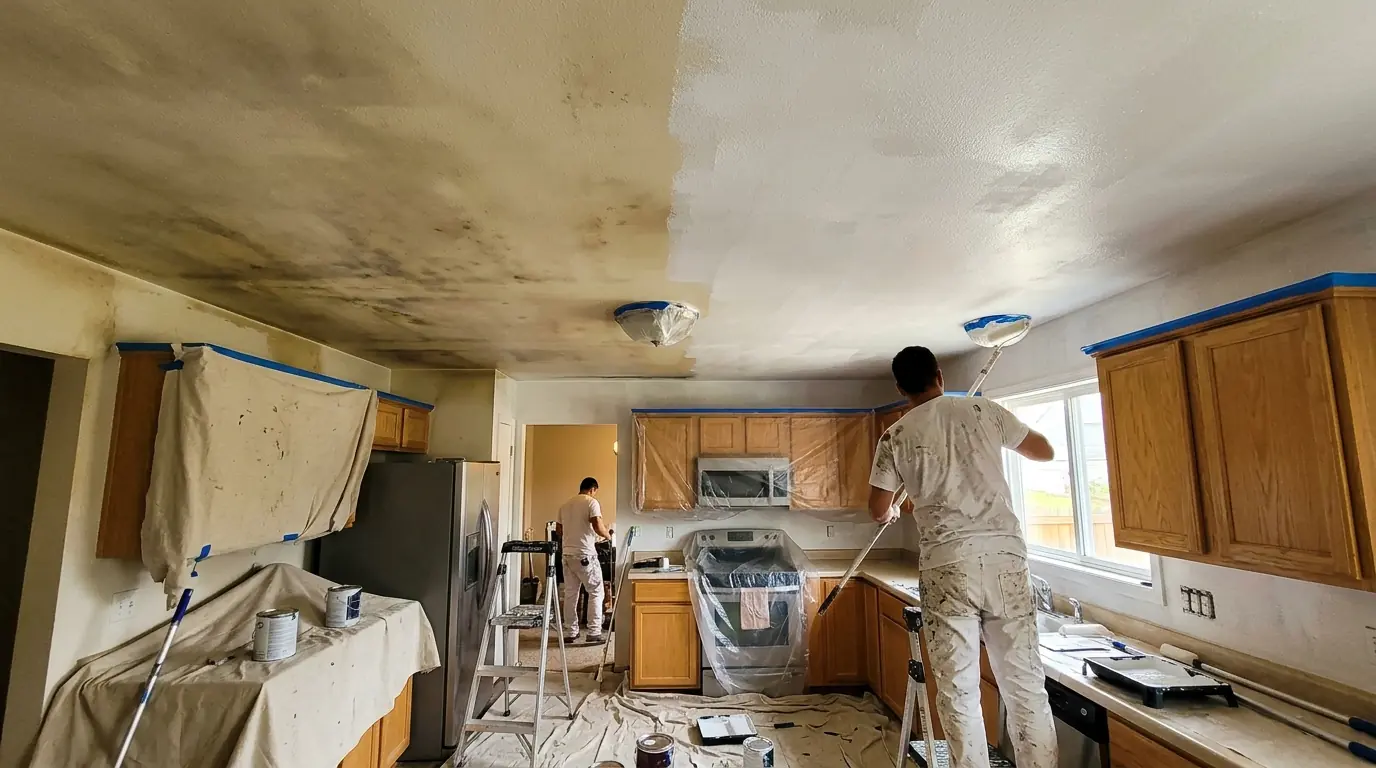
Smoke leaves a film of soot and oily residue on walls and ceilings, and the stain and the smell both migrate. Paint rolled straight over it lets the yellow-brown stain bleed back within days and can trap the odor in the room.
Getting it right is a sequence: clean the residue, seal everything with a primer designed to block stains and odor, then paint. On ceilings and rooms near the source, that sealer coat is the most important step of the job.
Updated September 2026
Types of work on this page
The 3 versions of this job we get asked for
Smoke and soot staining
Kitchen fires, furnace puff-backs, candles and fireplaces leave soot that can range from a faint gray haze to heavy black streaks above the source. Light residue is washed off with a degreasing cleaner; heavier soot is first removed by restoration cleaning. Once surfaces are clean and dry, every stained area, and usually the whole room, is sealed before painting. Trim and doors are cleaned and scuffed so the new enamel bonds, and cabinets near the source are often refinished at the same time.
Odor-sealing primers
Water-based primers do not stop smoke odor or stains reliably. Shellac-based and oil-based sealers do, which is why we use them on smoke-affected walls and ceilings after cleaning. They are applied with ventilation and the room cleared, and once dry they lock the residue under a hard film. Two coats of finish paint then go on over the sealer. This step is often what decides whether a room still smells of smoke a month later, which is why we never skip it.
Ceilings and walls after restoration
After a fire, restoration contractors usually handle the cleanup, drying and any drywall replacement. Our part is the finish: priming new drywall, sealing the existing surfaces, matching textures where patches meet old ceilings, and repainting walls, ceilings, trim and doors so the rooms look finished again. If you have an adjuster's scope of work, share it and we will price the painting to it. We also note anything the scope misses, such as closets or hallway ceilings, so you can raise it with the adjuster before work starts.
What moves the price
What decides the cost of this job
Pricing comes from a walkthrough of the actual surfaces.
- Extent of staining. One wall versus a whole floor.
- Cleaning needed. Light residue or restoration first.
- Sealer coats. Shellac or oil primer on affected areas.
- Ceilings. Ceilings near the source take the most work.
- Trim, doors and cabinets. Cleaned, sealed and recoated.
- Texture matching. Patched areas blended into old texture.
Local conditions
Fire & Smoke Damage Repainting around Naperville
Smoke damage calls in Naperville are mostly small kitchen fires and furnace puff-backs, and they cluster in the colder months when heating systems and fireplaces run hardest; the Chicago area has roughly a hundred nights a year at or below freezing. Winter work means drying times run longer indoors, so we ventilate carefully and allow extra time between the sealer and the finish coats.
What is included
Everything the estimate covers
- Restoration cleanup finished first
- Soot residue washed off
- Repairs and new drywall prepared
- Shellac or oil-based sealer applied
- Ventilation during sealing
- Two finish coats
- Trim and doors sealed and recoated
- Final check for bleed-through
Step by step
How the job runs from the first call to the last coat
Assess
Extent of staining and what restoration covers.
Clean
Soot residue washed off once surfaces are dry.
Repair
Patches and new drywall prepared.
Seal
Shellac or oil-based stain and odor blocker.
First coat
Finish paint over the sealer.
Second coat
Full, even finish.
Walkthrough
Checked for any bleed-through or odor.
Timeline
How long smoke-damage repainting takes
A single kitchen or room usually takes two to three days including cleaning, sealing and two finish coats. Whole-floor jobs take longer, and winter humidity and temperature can stretch drying times.
FAQ
Questions about fire & smoke damage repainting in Naperville
No; they bleed through ordinary paint. The surface must be cleaned and sealed first.
Shellac-based and oil-based stain blockers seal both the stain and the odor.
We can price the painting to your adjuster's scope of work if you share it.
Heavy soot removal and drying are restoration work; we handle the sealing and repainting that follows.
Once cleanup and drying are finished and any new drywall is in place.
Not if the surfaces are cleaned and fully sealed before the finish coats.
Book fire & smoke damage repainting in Naperville
One number, both offices, answered around the clock. The estimate is a walkthrough, not a guess.
Call (630) 389-8505Calls answered 24 hours a day, 7 days a week.