Guides Older homes
Painting a home in the Naperville Historic District
Older houses around downtown bring plaster, old wood, lead-era paint and local guidelines. How to plan a paint job that respects all of them.
Updated September 2026
Quick answer
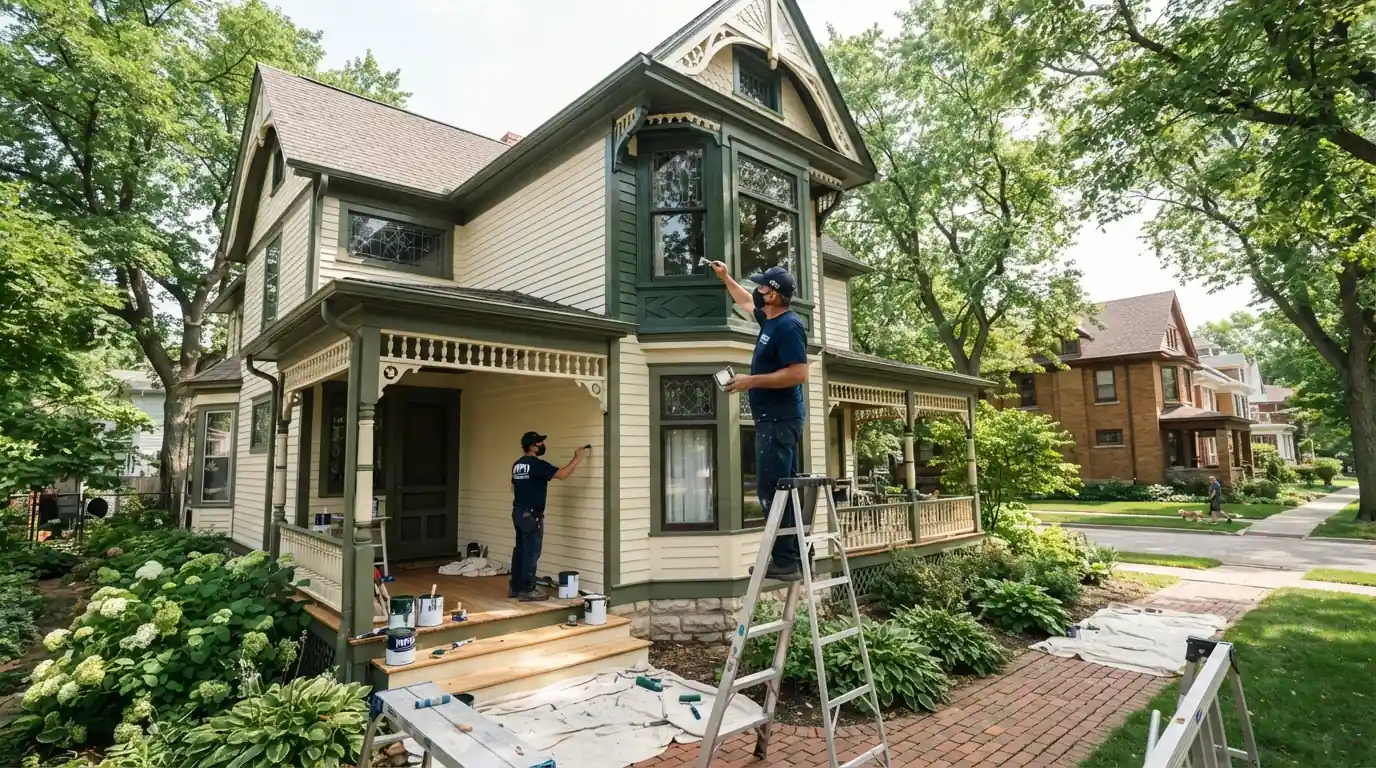
Painting a home in the Naperville Historic District means working with local guidelines that ask owners to keep exterior repairs consistent with the house's historic character, federal lead-safe rules for homes built before 1978, and older materials like plaster and old-growth wood trim. Plan for repair and careful prep rather than a quick repaint.
What the district is
Naperville's historic district covers the town as it was originally laid out and a few early additions, roughly around the downtown and North Central College. The National Register district, listed in 1977, includes 613 buildings, 544 of them contributing, in styles from Greek Revival and Italianate to Prairie School. The city's own local district, designated in 1986, covers around 320 properties including 253 homes.
The city encourages owners to renovate and repair in ways that fit each property's historic, architectural and aesthetic character, and some exterior changes on local district properties come under review. Before a major exterior change, check the city's current historic district guidance.
Lead-safe work on pre-1978 paint
Almost every house in the district was built long before 1978, and older paint layers there are likely to contain lead: roughly 90 percent of homes built before 1940 do. Federal rules require paid work that disturbs paint in these homes to follow lead-safe practices by certified firms, including containment, careful scraping and sanding methods, and thorough clean-up.
In practice that means exterior prep is slower and more controlled than on a newer house, with plastic under the work area, no open-flame or high-speed dry sanding of old paint, and debris bagged and removed. It is worth asking any painter you are considering how they handle it.
Exterior wood and trim
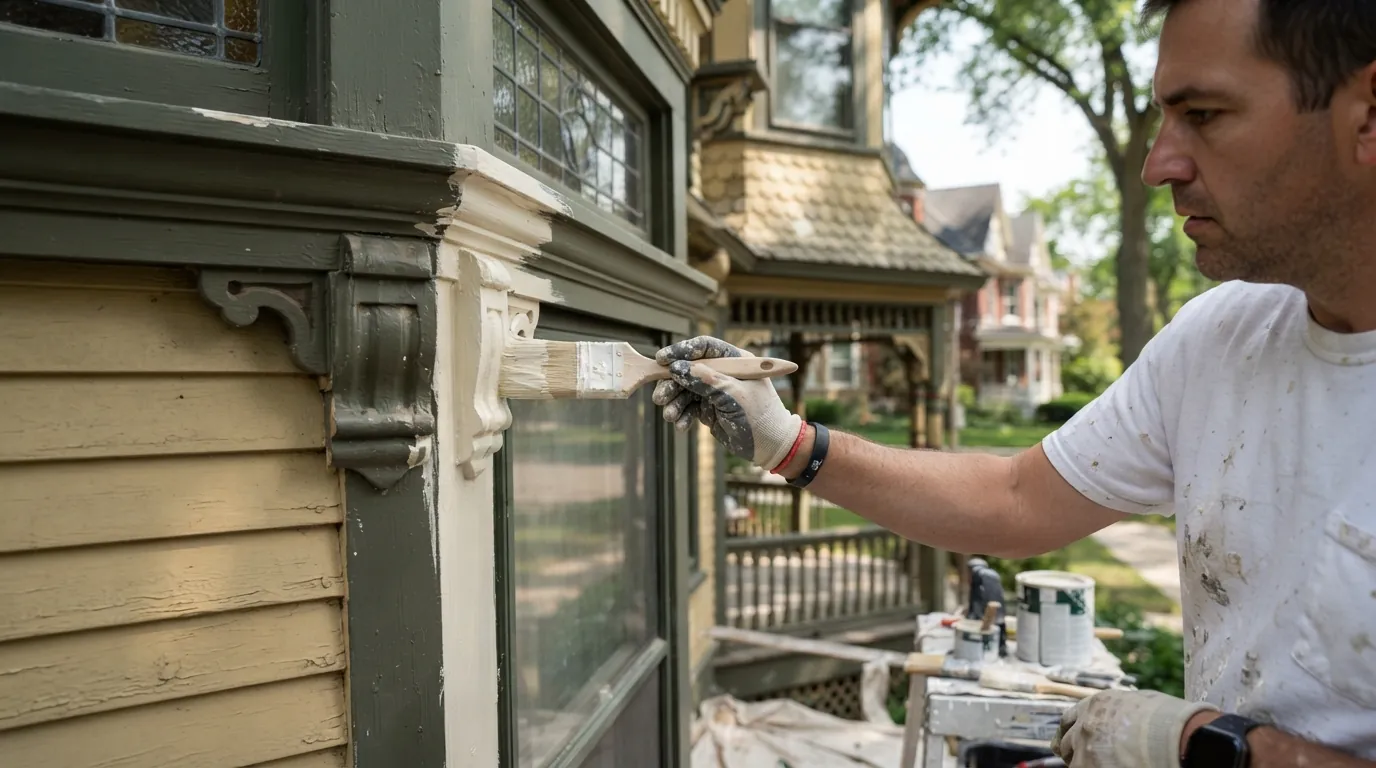
The trim on these houses, from porch columns and brackets to window casings and cornices, is often original old-growth wood that is denser and more stable than modern lumber. It is worth repairing rather than replacing. Soft spots can be rebuilt with epoxy consolidants that keep the original profile; see wood rot repair.
Paint on old wood has often been built up over a century. Rather than stripping to bare wood everywhere, the usual approach is to scrape to a sound edge, feather, spot-prime and repaint, stripping only where the build-up is failing or obscuring detail.
Want this handled for you?
Call (630) 389-8505 any hour and we will book a walkthrough.
Call (630) 389-8505Plaster inside
Inside, these homes usually have lime or gypsum plaster over wood lath rather than drywall. Plaster cracks as the house moves and can come loose from the lath. The right repair re-anchors it and skims it smooth, rather than covering it with drywall, which loses trim reveals and character.
Plaster walls take paint beautifully once repaired, and they are an ideal base for limewash or Venetian plaster finishes. See plaster repair for how we handle cracks, loose areas and skim coats.
Choosing period-appropriate colors
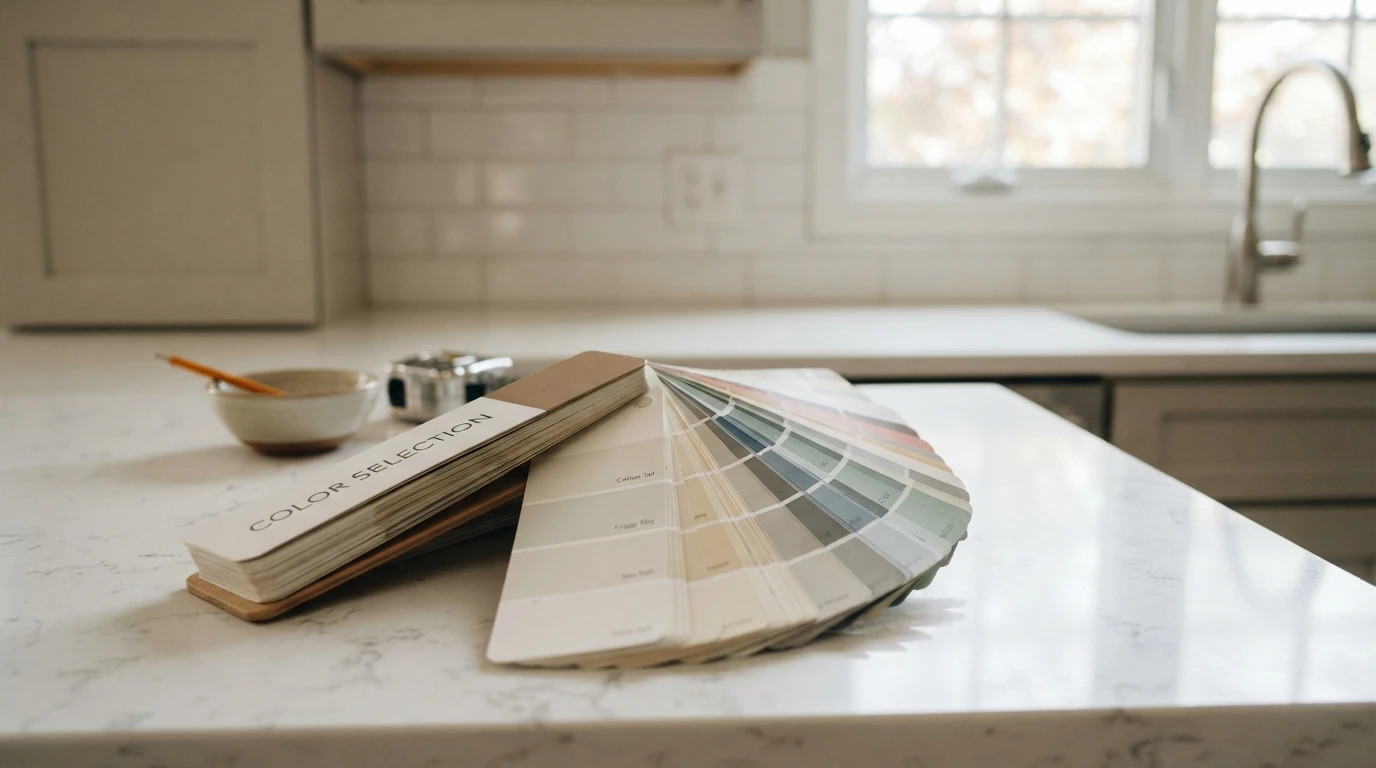
Houses of different eras suit different palettes. Italianate and Victorian homes often carried richer body colors with contrasting trim and accent colors on details; Prairie School and bungalow homes tend toward earthy, muted tones. Many paint manufacturers publish historic color collections that make a good starting point.
Color is also where the district's guidance may matter for a listed property, so check before settling on a dramatic change. Our guide to choosing exterior colors covers sampling on the house itself.
Planning the job
Budget time for inspection and repair before painting: probing for rot, checking plaster, testing old paint where needed, and planning containment. The painting itself is the smaller part of the work on an older home.
Exterior work follows the same season as any Naperville house, from spring through October. Interior plaster and paint work can happen year round, and winter is often a good time to get the inside done.
FAQ
Questions homeowners ask
Check the city's current guidance; some exterior changes on local district properties come under review, especially major changes.
In pre-1978 homes, yes. Paid work that disturbs old paint must follow federal lead-safe practices.
Usually not. Old-growth wood is worth repairing, and epoxy can rebuild damaged sections while keeping the profile.
Yes, once cracks and loose areas are repaired and skimmed.
Many paint makers publish historic collections that suit different architectural eras.
It covers the original town plat and early additions; check the city's district map for your address.
Keep reading
Related services and guides
Plaster Repair
Our plaster repair page: scope, pricing factors and timing in Naperville.
Learn moreExterior Wood Rot Repair
Our exterior wood rot repair page: scope, pricing factors and timing in Naperville.
Learn moreExterior House Painting
Our exterior house painting page: scope, pricing factors and timing in Naperville.
Learn moreChoosing exterior paint colors for a Naperville home
Exterior colors are chosen against things you cannot change: the roof, the brick, the street and the light. A practical way to narrow the ch
Learn moreSigns your exterior paint is failing
Paint rarely fails all at once. What each sign means, which ones are cosmetic, and which ones mean water is already getting in.
Learn moreHow long exterior paint lasts in Illinois weather
Paint life is not one number. It depends on the surface, which way it faces, how it was prepared and what went on it.
Learn moreTalk to a painter in Naperville
One number for both offices, answered 24 hours a day.
Call (630) 389-8505Calls answered 24 hours a day, 7 days a week.