Commercial Naperville, IL
Garage floor epoxy coatings for Naperville homes
Concrete ground open, cracks filled, and a flake or solid epoxy base sealed under a topcoat made to shrug off road salt and hot tires.
- Calls answered 24/7
- Flake, solid and polyaspartic
- Ground, not just etched
Quick answer
A garage floor coating in Naperville has to survive road salt, melting snow and hot tires, so the prep matters more than the color: we diamond-grind the concrete rather than acid-etch it, fill cracks and pits, apply an epoxy base with flake or solid color, and seal it with a polyaspartic or urethane topcoat. Most two-car garages take two days. Call to book a look at the slab.
What the job involves
Why most garage coatings peel, and how grinding prevents it
Hot-tire pickup, where the coating lifts off in patches under the car, is almost always a bonding failure: the concrete was etched with acid or not prepped at all, so the coating sat on a weak surface layer. We grind the slab with diamond tooling to open the pores, vacuum the dust, and test for moisture before anything goes down.
The system is a 100 percent solids epoxy base coat, broadcast vinyl flake if you want the speckled finish, and a clear polyaspartic or urethane topcoat that resists UV yellowing and salt. It is a coating system, not a floor paint.
Updated September 2026
Types of work on this page
The 3 versions of this job we get asked for
Flake epoxy
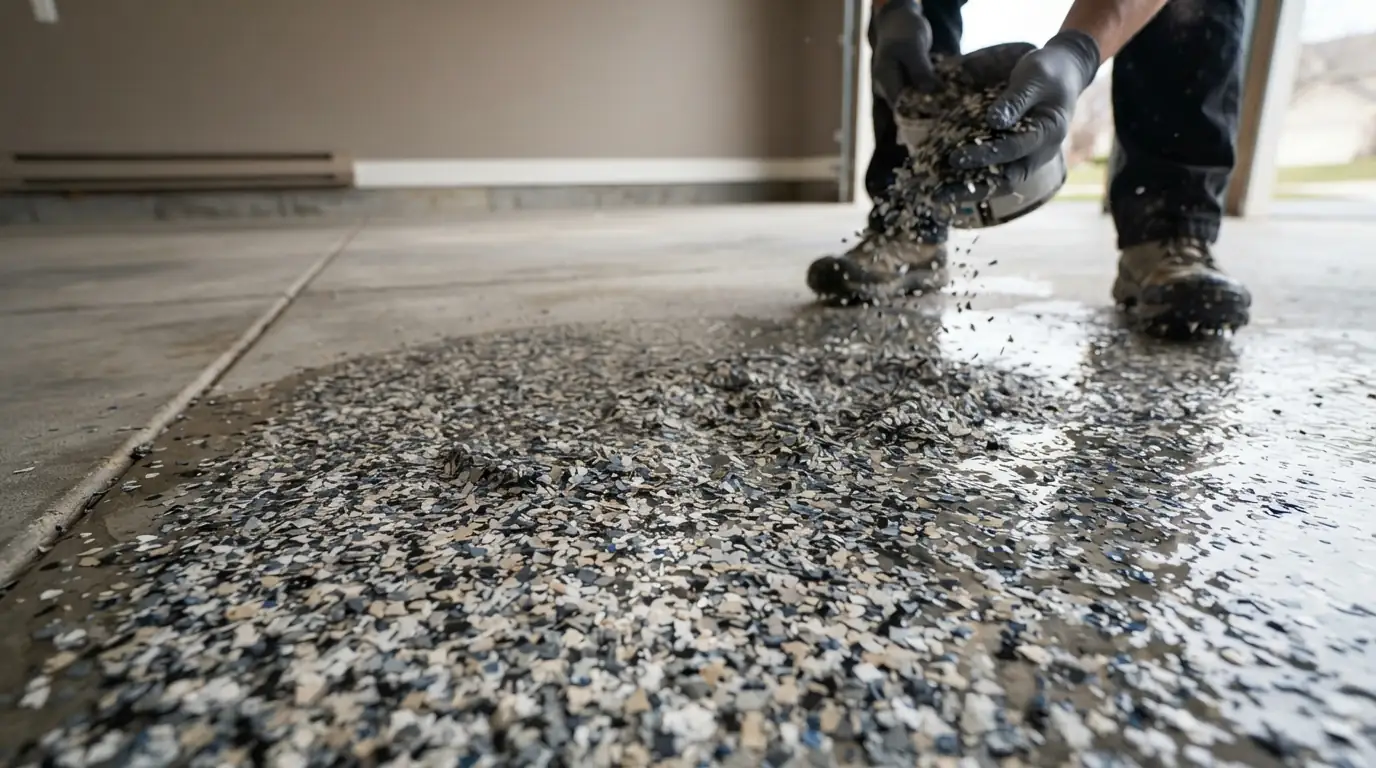
The full-broadcast flake floor is the most popular choice for Naperville garages because the texture hides dust, salt residue and tire marks between cleanings and adds a little grip underfoot. After the base coat goes down, vinyl flake is thrown until the surface is fully covered, the excess is scraped and vacuumed the next morning, and two coats of clear topcoat lock it in. Flake blends in gray, tan and black are the usual picks. The finish is harder to scratch-mark than a solid color and far easier to live with in winter.
Solid-color epoxy
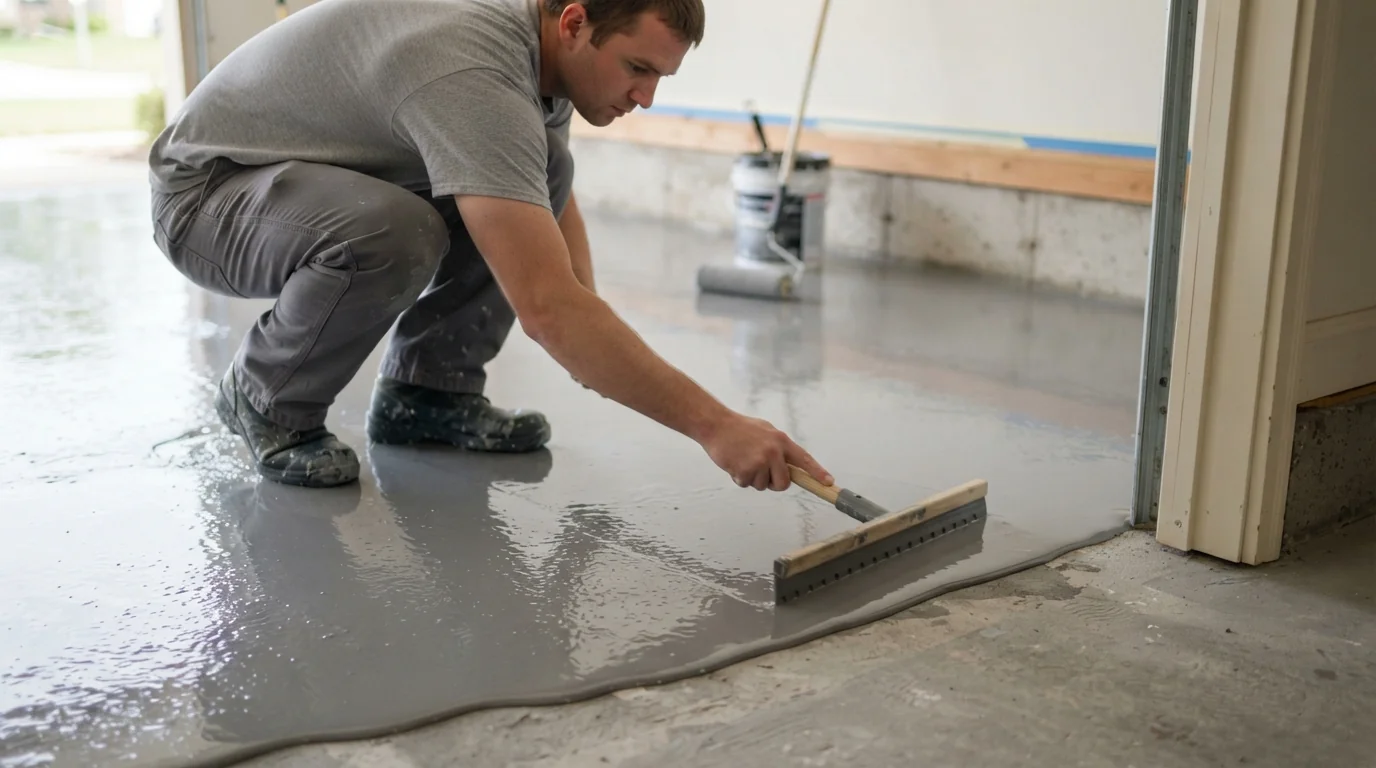
A single solid color, usually a light gray, gives a clean showroom look and brightens a dark garage. It shows dust and salt more than flake, so it suits a garage used more as a workshop than as a daily entry in January. We still grind and repair the slab, apply a pigmented epoxy base, and seal with a clear topcoat, adding a fine anti-slip aggregate where the floor will get wet. Painted parking lines, a border in a second color, or a darker walk path are common options.
Polyaspartic topcoats
Polyaspartic is the topcoat that makes a garage floor last: it cures fast, stays clear in sunlight where epoxy would yellow, and holds up better to road salt and hot tires. It can also be used as a one-day system on its own, with a polyaspartic base and topcoat, when you need the garage back quickly. We choose the topcoat based on how the garage is used and how much direct sun the door opening lets in. Either way the floor is walkable in hours and ready for cars in a day or two.
Choosing between the options
Flake, solid or one-day polyaspartic
Three systems, chosen by how you use the garage and how fast you need it back.
| System | Look | Hides dirt and salt | Back in use |
|---|---|---|---|
| Epoxy base, full flake, clear topcoat | Speckled terrazzo look | Very well | Cars in 2 to 3 days |
| Epoxy base, solid color, clear topcoat | Clean single color | Less well | Cars in 2 to 3 days |
| Polyaspartic base and topcoat | Flake or solid | Well with flake | Cars in about a day |
What moves the price
What decides the cost of this job
Pricing comes from a walkthrough of the actual surfaces.
- Square footage. A standard two-car garage versus a three-car or tandem.
- Concrete condition. Cracks, pits and spalling add repair time.
- Existing coating. Removing old paint or failed epoxy adds grinding.
- System choice. Full flake with two topcoats costs more than a single solid coat.
- Moisture. A slab with moisture issues needs a vapor-tolerant primer.
- Extras. Stem walls, steps and anti-slip additives are separate lines.
Local conditions
Garage Floor Epoxy Coating around Naperville
With around a hundred nights below freezing a year in the Chicago area and salted roads from December through March, the concrete in a Naperville garage takes a steady bath of meltwater and chloride off every car. That is what pits and spalls uncoated slabs, and it is why we specify a salt-resistant topcoat here rather than a single coat of epoxy paint, and grind out any existing spalling before the base goes down.
Step by step
How the job runs from the first call to the last coat
Inspect the slab
Cracks, spalling, old coatings and a moisture test.
Clear and protect
Garage emptied; walls and door bottom masked.
Diamond grind
Concrete opened to a profile the coating can bond to.
Repair
Cracks and pits filled and ground flush.
Base coat
Epoxy base rolled out, flake broadcast if chosen.
Topcoat
Excess flake removed, clear topcoat applied.
Cure and return
Foot traffic in hours, cars in one to two days depending on the system.
Brands we apply
FAQ
Questions about garage floor epoxy coating in Naperville
Foot traffic the same evening; cars after 24 to 72 hours depending on the topcoat and temperature. We give you the exact time on the day.
Not when the floor is ground and properly primed. Hot-tire peeling comes from poor bonding, which grinding is there to prevent.
A smooth coating can be. Flake adds texture, and an anti-slip additive in the topcoat helps on solid colors.
Not reliably. The old paint is ground off first so the new system bonds to the concrete.
Yes, if the garage can be kept above the product's minimum temperature for application and cure. Cold slows the cure.
Hairline and shrinkage cracks are filled; moving structural cracks can telegraph back through and we will tell you if a slab has them.
Book garage floor epoxy coating in Naperville
One number, both offices, answered around the clock. The estimate is a walkthrough, not a guess.
Call (630) 389-8505Calls answered 24 hours a day, 7 days a week.