Guides Exteriors
Signs your exterior paint is failing
Paint rarely fails all at once. What each sign means, which ones are cosmetic, and which ones mean water is already getting in.
Updated September 2026
Quick answer
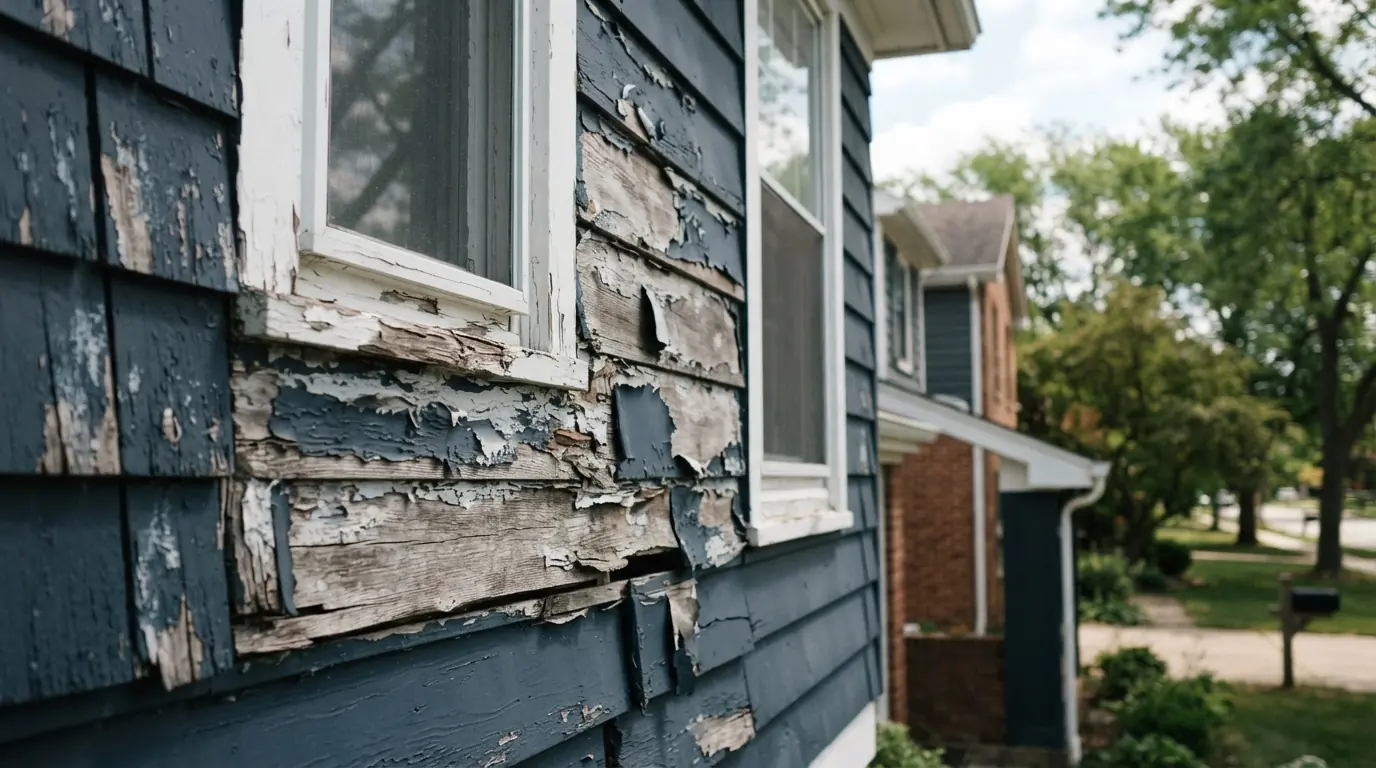
On a Naperville house, the signs that exterior paint is failing are chalking siding, peeling at sills and trim ends, cracked caulk at windows and corners, mildew on shaded walls, and soft wood under the paint. Chalking and fading are cosmetic; peeling, open joints and soft wood mean water is getting in and should be fixed before winter.
Chalking and fading
Rub your hand across the siding on the sunniest side of the house. If it comes away white or colored with powder, the paint has chalked: sunlight has broken down the binder and the pigment is sitting loose on the surface. Fading usually comes with it, often more on the south and west walls than on the north.
Chalking on its own is not a leak risk, but it tells you the finish is near the end of its life, and it has to be washed off completely before any new paint will stick. It is the most common sign on the aluminum-sided and older painted-cedar houses around Naperville.
Peeling at the bottom, not the top
Where paint peels tells you why. Peeling at the bottom edge of siding boards, along sills and at the base of door and window casings usually means water is getting into the wood from behind or wicking up the end grain, and the paint is being pushed off.
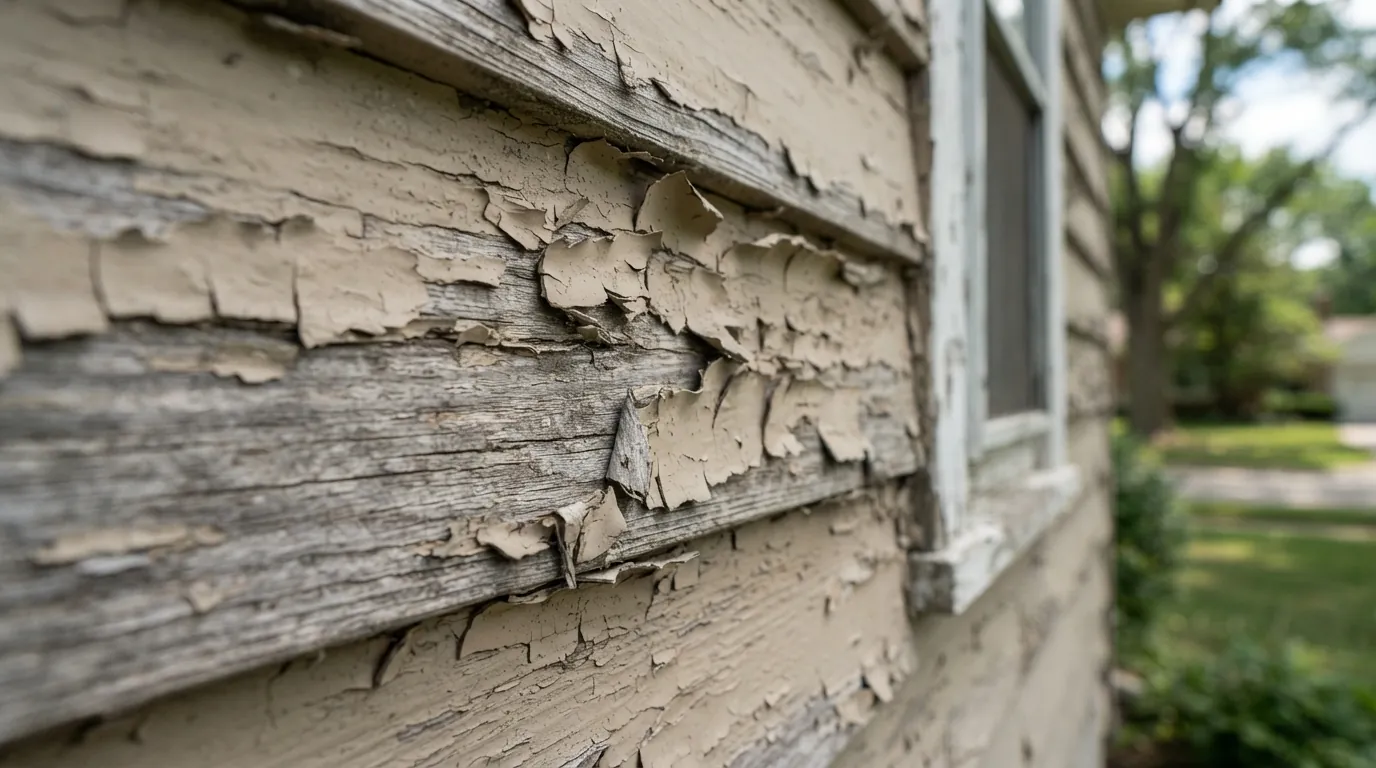
Peeling in large sheets across a whole wall, especially on older houses, can point to moisture moving out through the wall from inside, or to a later coat that never bonded to the one underneath. Either way, scraping and repainting without addressing the cause brings it back.
Cracked caulk and open joints
Look at the joints where trim meets siding, the corners of window casings, and the miters on fascia. Caulk that has cracked, pulled away or gone hard and gray is no longer sealing. Around 102 freezing nights a year in the Chicago area open and close those joints constantly, so caulk here has a hard life.
Open joints are the most important sign on this list, because they are how water gets behind the paint and into the wood. Re-caulking and repainting trim at this stage is far cheaper than repairing rot later. See trim, soffit and fascia painting.
Want this handled for you?
Call (630) 389-8505 any hour and we will book a walkthrough.
Call (630) 389-8505Mildew and dark streaks
Green, gray or black spotting on north walls, under eaves and behind shrubs is mildew. It grows on the dust and chalk that collects on paint in damp, shaded spots, and Naperville's humid summers feed it.
Mildew can usually be washed off with the right cleaner at low pressure, which is part of every exterior job we do. But it will come back through new paint unless it is killed first and the new finish includes a mildewcide. Our power washing page explains why we soft-wash rather than blast siding.
Soft wood under the paint
Press a screwdriver into any sill, the bottom of door casings, fascia corners and the lowest siding boards. If it sinks in or the wood feels spongy, it is rot. Paint over rot looks fine for a season and then splits.
Soft wood has to be cut back and replaced or rebuilt with epoxy before painting. It is quoted separately because every house is different. See exterior wood rot repair.
Trim job or full repaint?
If the siding is chalky but sound and the trouble is at the trim and caulk, a trim-only repaint buys several years for much less than a full job. If the siding is peeling across whole walls, the color has faded unevenly, or you are changing colors, it is time for the whole house.
Timing matters too. Our guide to the exterior painting season explains why fall is a good time to fix open joints and peeling trim before winter.
FAQ
Questions homeowners ask
It is cosmetic, but it means the finish is aging and must be washed off before repainting.
Sills hold water. Peeling there usually means water is getting into the wood through end grain or open joints.
No. Loose paint must be scraped to a sound edge and bare wood primed, or the new coat will fail too.
It varies by exposure and prep; sunny walls and trim fail first. Many homes need trim attention before the siding.
Mildew is a surface mold that grows on paint; it can be cleaned, but it returns without a mildewcide.
Open caulk joints, peeling sills and any soft wood, since those let water in during freeze-thaw cycles.
Keep reading
Related services and guides
Exterior House Painting
Our exterior house painting page: scope, pricing factors and timing in Naperville.
Learn moreExterior Trim, Soffit & Fascia Painting
Our exterior trim, soffit & fascia painting page: scope, pricing factors and timing in Naperville.
Learn moreExterior Wood Rot Repair
Our exterior wood rot repair page: scope, pricing factors and timing in Naperville.
Learn moreWhat interior painting costs in Naperville
The published ranges for the Chicago area, the six things that move a quote, and how to tell whether two estimates are pricing the same job.
Learn moreAluminum siding: paint it or replace it?
Aluminum siding rarely wears out, but its factory finish does. Painting can bring it back for a fraction of replacement, if the siding is so
Learn moreGetting HOA approval for a new exterior color
Many subdivisions in the western suburbs require approval before you change exterior colors. A little planning keeps it from delaying the jo
Learn moreTalk to a painter in Naperville
One number for both offices, answered 24 hours a day.
Call (630) 389-8505Calls answered 24 hours a day, 7 days a week.