Exterior Painting Naperville, IL
Fence staining and painting across Naperville
Washed, dried, back-brushed and sprayed both sides, with the stain chosen for the wood you have and the winters it will face.
- Calls answered 24/7
- Cedar and pressure-treated fences
- Sprayed and back-brushed
Quick answer
Fence staining in Naperville is worth doing every three to four years on cedar and every two to three on pressure-treated pine, because freeze-thaw and summer sun open the grain. We wash, let the wood dry, then spray and back-brush both sides. Most fences are a one to two day job.
What the job involves
Why fences go gray and how a proper stain job stops it
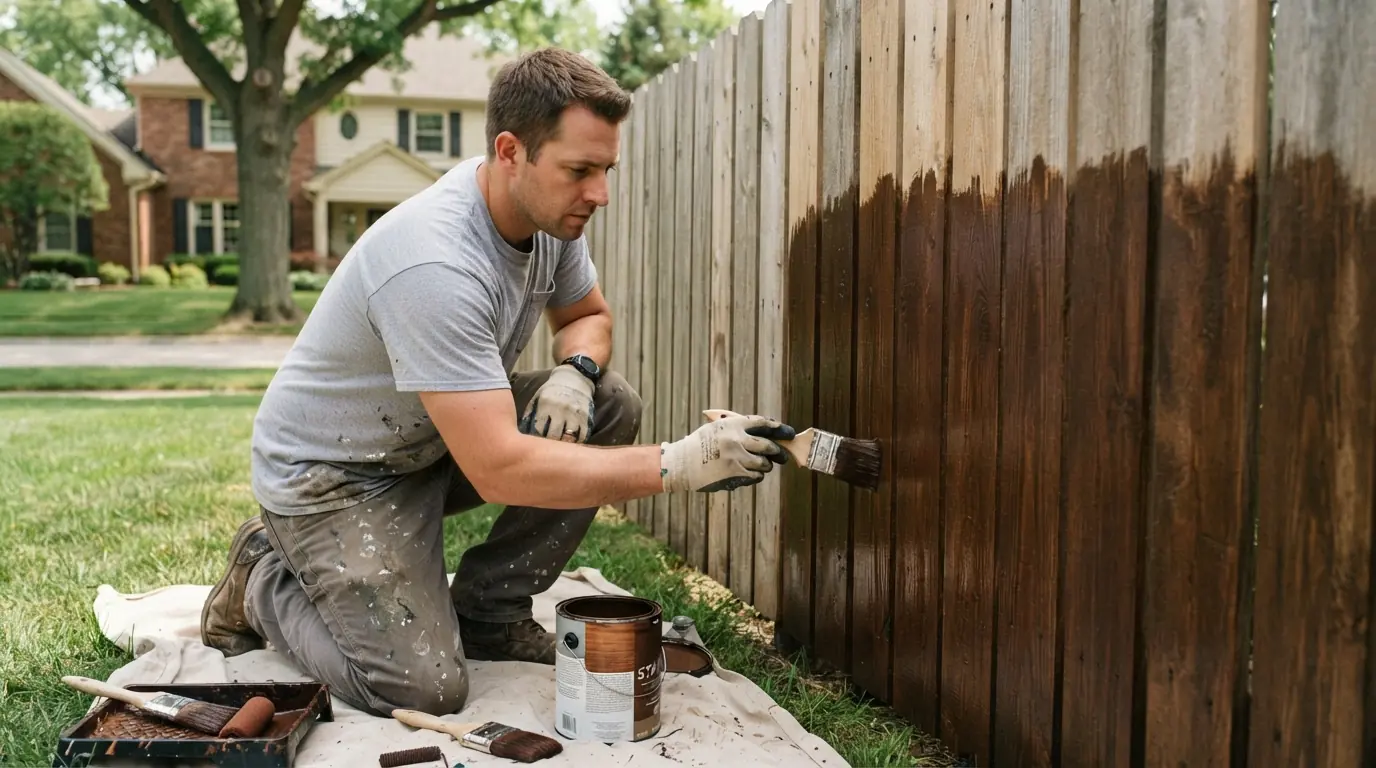
A fence dries from the top down, so the bottom rail rots while the top boards bleach. Unsealed cedar goes silver in a season and pressure-treated pine grays and checks. Stain slows that only if it gets into clean, dry wood, brushed into the grain rather than misted over it.
We treat the fence as two surfaces, yours and your neighbor's, and quote both unless you tell us otherwise.
Updated September 2026
Types of work on this page
The 3 versions of this job we get asked for
Cedar privacy fences
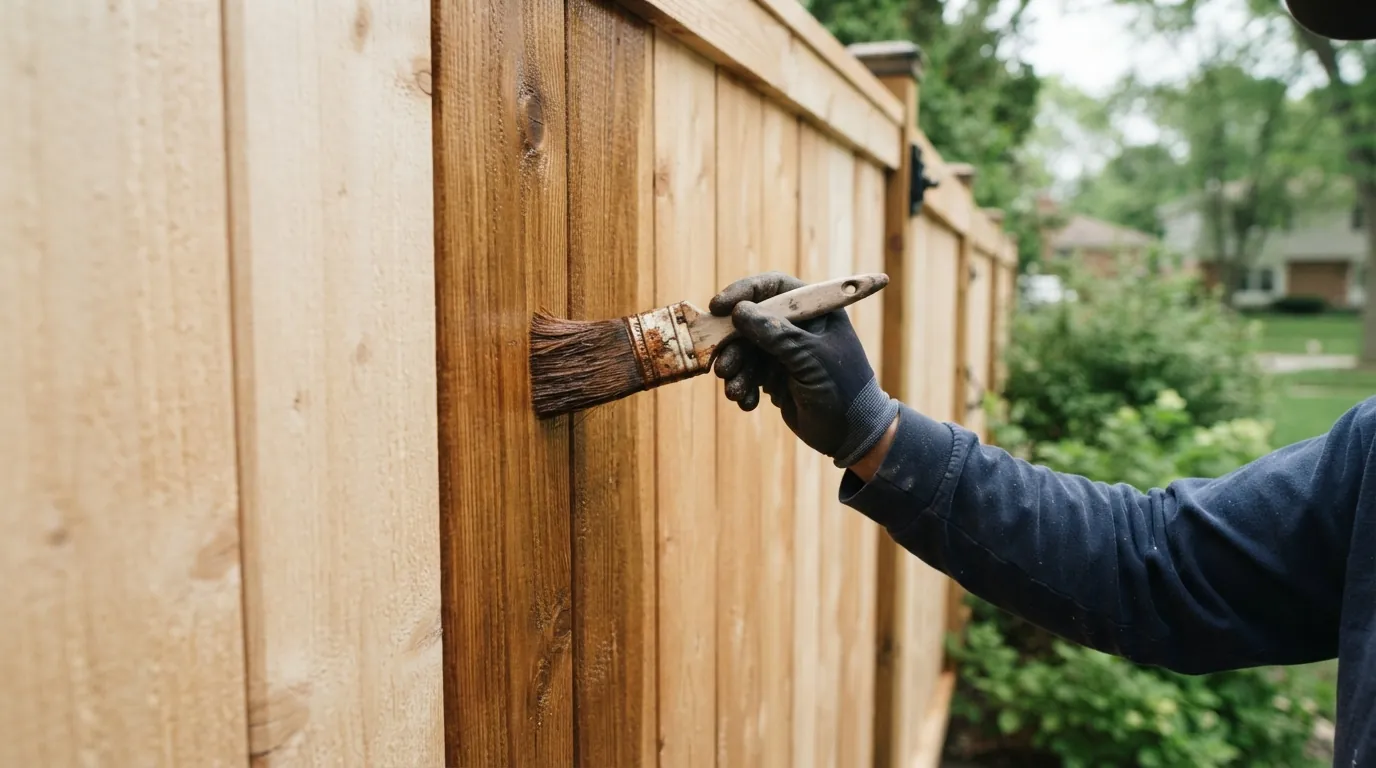
Cedar is the standard fence in Naperville subdivisions, and it looks its best under a semi-transparent stain that lets the grain show. We wash with a wood cleaner and brightener rather than high pressure, which furs the surface, then wait for dry weather so the moisture reading drops. The stain is sprayed and immediately back-brushed so it works into the boards instead of sitting on top. Cedar that has already gone silver can usually be brought back with a brightener before staining; badly checked boards are replaced first.
Pressure-treated pine
Pressure-treated fences need to weather before they will take a stain, usually three to six months after installation, otherwise the treatment chemicals push the coating back out of the wood. After that the wood drinks stain, so budget for more product than a cedar fence of the same length. Loose pickets are refastened first. We use a penetrating oil or a hybrid stain in a semi-transparent tone on newer fences and move to a solid stain once the boards have started to check.
Sprayed solid stain
A solid stain is the right call for an older fence with mismatched replacement boards, heavy graying or an HOA color requirement. It covers like paint but stays flexible and breathable, so it does not peel the way exterior paint does on a fence. We spray it with airless equipment and back-brush the first coat to push it into the grain; the second coat evens the color. Solid stain also lasts the longest between recoats, typically four to five years on a Naperville fence, and it takes touch-ups without a visible patch.
Local conditions
Fence Staining & Painting around Naperville
Around a hundred nights a year fall below freezing in the Chicago area, so a Naperville fence swells wet in October and locks in that water through winter, which is what splits the tops of unsealed pickets. The 1980s and 1990s subdivisions south of 75th Street and on the Will County side have fences at the age where solid stain becomes the sensible choice, while newer cedar out toward Plainfield still suits a semi-transparent.
Step by step
How the job runs from the first call to the last coat
Measure and inspect
Linear feet, height, wood type and the condition of posts, rails and gates.
Repairs
Loose pickets refastened, split boards swapped, gate hardware tightened.
Wash and brighten
Wood cleaner and brightener, low pressure rinse.
Dry down
One to three dry days until the moisture reading is right.
Mask
Plants, siding, patio and the neighbor's side protected.
Spray and back-brush
First coat worked into the grain; second coat where the product calls for it.
Walkthrough
Both sides checked with you; recoat schedule left in writing.
Choosing between the options
Semi-transparent, semi-solid or solid stain
The choice is about how much wood you want to see and how long you want to wait before doing it again.
| Stain type | Shows grain | Best for | Typical recoat |
|---|---|---|---|
| Semi-transparent | Yes, fully | New or brightened cedar | 3 to 4 years |
| Semi-solid | Hints of grain | Cedar with some graying | 3 to 5 years |
| Solid | No | Older, mismatched or HOA-color fences | 4 to 5 years |
Do it yourself or call us
Staining a fence yourself versus booking the crew
Plenty of homeowners stain their own fence; prep and drying time decide the result.
| Factor | Doing it yourself | Hiring us |
|---|---|---|
| Cleaning | Pressure washer often furs the wood | Cleaner and brightener, low pressure |
| Drying | Hard to judge; stain over damp wood peels | Moisture meter before coating |
| Application | Brushing 200 feet by hand takes a weekend | Sprayed and back-brushed in a day |
| Both sides and gates | Often skipped or rushed | Quoted and coated as part of the job |
What moves the price
What decides the cost of this job
Chicago-area cost guides list deck or fence staining at $800 to $2,500 for a typical property; long or double-sided fences run higher. That is a market planning range, not our quote.
- Linear feet and height. A six-foot fence has half again the surface of a four-foot one.
- Both sides or one. Neighbor-side staining roughly doubles the coating area.
- Wood condition. Gray or mildewed wood needs a brightener and more stain.
- Stain type. Solid stain covers in two coats; semi-transparent on thirsty wood can need more product.
- Repairs. Loose pickets, split boards and a sagging gate are fixed first and itemized.
- Access. Planting beds, sloped yards and tight side yards slow the spray work.
Brands we apply
Want a real date for fence staining & painting?
Call (630) 389-8505 any hour. Tell us the rooms or the elevation and we will book the walkthrough.
Call (630) 389-8505FAQ
Questions about fence staining & painting in Naperville
Semi-transparent on cedar every three to four years, pressure-treated pine every two to three, solid stain every four to five. Sun-facing runs go first.
Not right away. Let it weather three to six months so the treatment dries out, then it will take stain properly.
If you want it and they agree, yes. We quote both sides by default and can remove the second side from the estimate.
Stain. Exterior paint on a fence peels within a couple of winters because the boards move so much; solid stain gives the same opaque color without peeling.
We mask siding and patios and cover beds with breathable drop cloths. Overspray on a windy day is why we sometimes reschedule.
Usually. A brightener removes the gray layer; if the wood is deeply checked, a solid stain is the better-looking result.
Book fence staining & painting in Naperville
One number, both offices, answered around the clock. The estimate is a walkthrough, not a guess.
Call (630) 389-8505Calls answered 24 hours a day, 7 days a week.