Interior Painting Naperville, IL
Radiator and cast-iron painting around Naperville
Old cast-iron radiators repainted the right way: cleaned, rust treated, primed and finished in an enamel made to handle the heat.
- Calls answered 24/7
- Heat-tolerant enamels
- Lead-safe on old paint
Quick answer
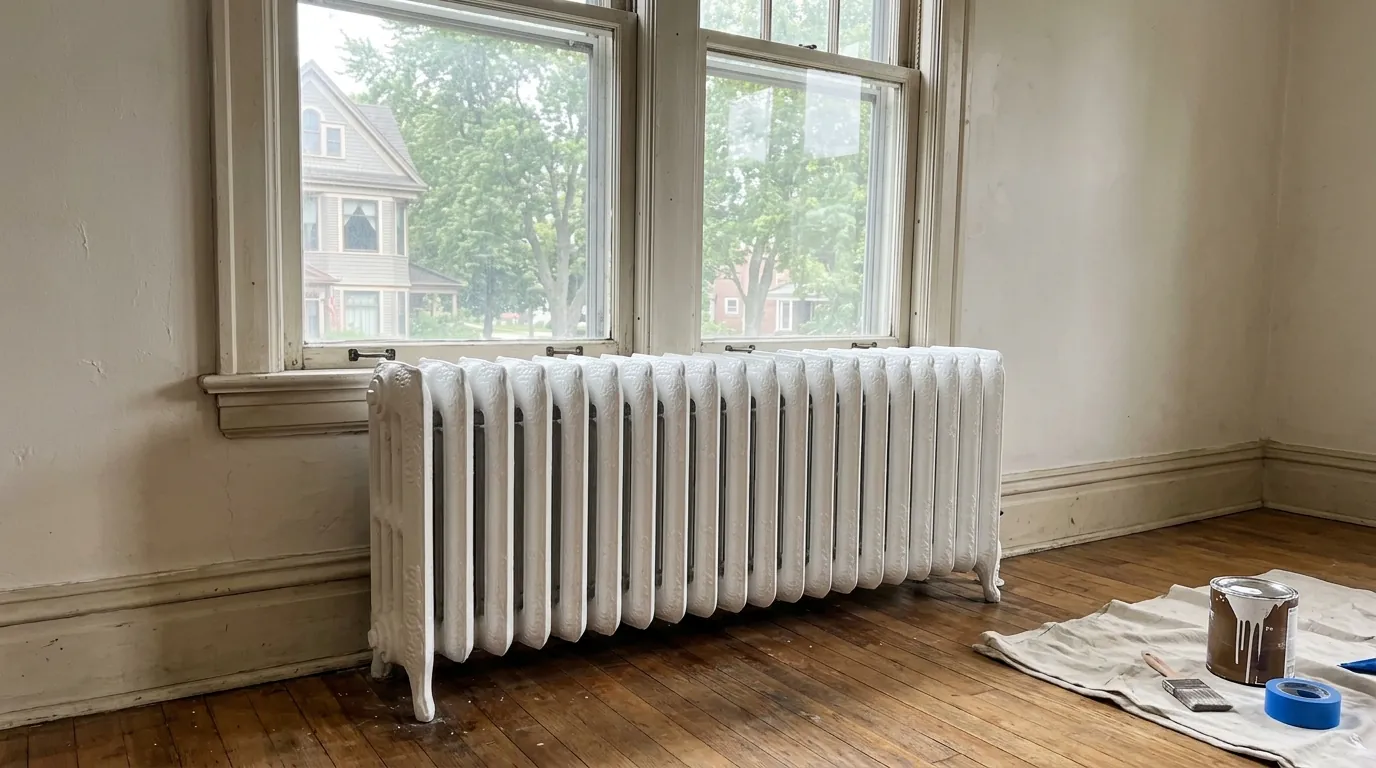
Radiator painting means cleaning off dust and grime, removing flaking paint and rust, priming bare metal, and finishing in a heat-tolerant enamel with the heat off. Old radiators often carry layers of pre-1978 paint, so the prep is done lead-safe. We paint them in place or, where the plumbing allows, after a heating contractor disconnects them.
What the job involves
Why radiators peel and yellow
Radiators heat up and cool down hundreds of times a season, and ordinary wall paint cannot cope: it cracks, flakes off the fins and turns yellow. Dust baked onto the surface also stops new paint from bonding. A lasting finish needs clean metal, a primer made for metal and a topcoat rated for the heat.
Many radiators in older homes also wear decades of paint, some of it metallic bronze or silver, and much of it from before 1978. That makes careful, contained prep as important as the finish coat.
Updated September 2026
Types of work on this page
The 3 versions of this job we get asked for
Cast-iron radiators
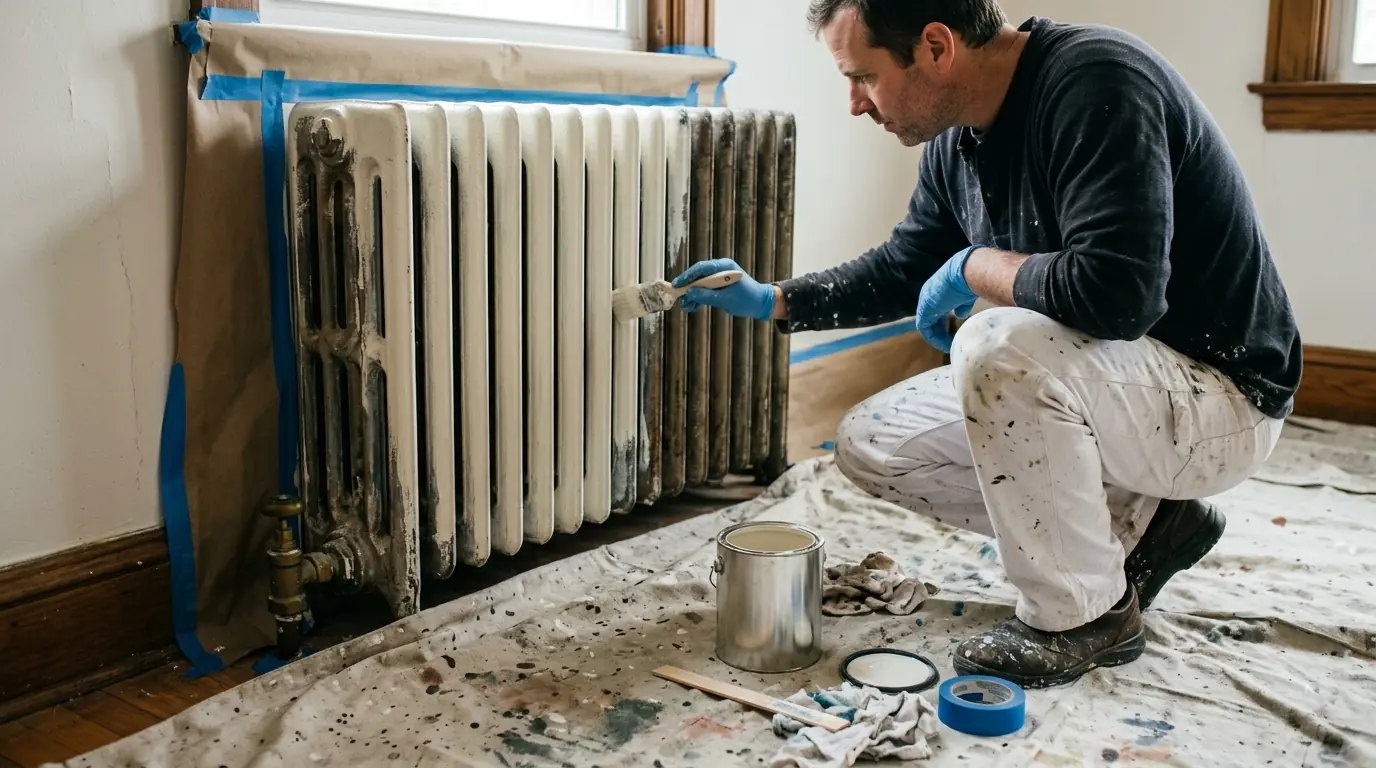
Column and tube radiators are degreased and vacuumed between the fins, then loose paint and rust are removed with hand tools and wire brushes under containment. Bare metal gets a rust-inhibiting primer, and the radiator is finished in two thin coats of a heat-tolerant enamel, brushed or sprayed with the surrounding floor and walls masked. The heat must be off and the radiator cool while we work, so this is best scheduled from late spring to early fall. Valves, vents and gauges are masked so they still work afterward.
Baseboard heater covers
Steel baseboard covers on hot-water heating chip, rust at the bottom edge and pick up scuffs from vacuums and furniture. We clean and scuff them, treat any rust, prime the bare spots and finish in a durable enamel that matches or contrasts with the trim. Covers can usually be painted in place with the heat off; damaged end caps and dampers are pointed out so you can replace them before painting. A neat cover makes a newly painted room look finished rather than half done.
Cast-iron and metal fixtures
Older homes have other painted metal inside: cast-iron grilles and registers, steel basement columns, metal stair rails and old fireplace surrounds. Each gets the same approach of cleaning, rust treatment, a primer suited to the metal and a hard enamel topcoat. Registers and grilles are often easier to strip and spray off site, then reinstall. We tell you up front which items are worth painting and which would be better replaced, so you are not paying to refinish something that is failing.
What moves the price
What decides the cost of this job
Pricing comes from a walkthrough of the actual surfaces.
- Number and size. Column count and height of each radiator.
- Condition. Flaking paint and rust take longer to prep.
- Old paint. Lead-safe containment on pre-1978 coatings.
- In place or removed. Removal needs a heating contractor.
- Finish. Brushed or sprayed, color or metallic.
- Access. Tight corners and furniture around units.
Local conditions
Radiator & Cast-Iron Painting around Naperville
Radiators are not common in the 1980s and 1990s houses that make up most of Naperville, but they are in the older homes we paint in the surrounding towns and near downtown, where hot-water heat was standard. In the Chicago area those radiators work hard for months every winter, so we schedule repainting for the warm months when the heat can stay off while the enamel cures.
Step by step
How the job runs from the first call to the last coat
Heat off
Radiators cool before any work starts.
Protect
Floors, walls and valves masked.
Clean
Degreased and vacuumed between fins.
Remove loose paint and rust
Hand tools under containment.
Prime
Rust-inhibiting primer on bare metal.
Enamel
Two thin heat-tolerant coats.
Cure
Left to cure before the heat goes back on.
Timeline
How long radiator painting takes
Most homes take a day or two for several radiators, including prep and two coats. The enamel then needs time to cure before the heat goes back on, so we plan the work for the warmer months.
Do it yourself or call us
Painting radiators yourself versus having it done
It looks like a small job. The fins, the heat and old paint make it harder than it seems.
| Factor | Doing it yourself | Hiring us |
|---|---|---|
| Prep | Paint over dust and rust | Degreased, de-rusted and primed |
| Old paint | Dry sanding spreads lead dust | Containment and lead-safe cleanup |
| Coverage | Missed backs and fins | Every face reached, thin even coats |
| Paint | Wall paint that yellows | Heat-tolerant enamel |
FAQ
Questions about radiator & cast-iron painting in Naperville
It will crack and yellow; radiators need a heat-tolerant enamel over a metal primer.
Usually not; most are painted in place with the floor and walls protected.
In older homes it often does, so we prep it with lead-safe containment and cleanup.
Thin coats of paint have little effect; heavy metallic paints were the old culprit.
Late spring to early fall, when the heat can stay off while the paint cures.
Yes, most enamel colors are available, including the wall or trim color.
Book radiator & cast-iron painting in Naperville
One number, both offices, answered around the clock. The estimate is a walkthrough, not a guess.
Call (630) 389-8505Calls answered 24 hours a day, 7 days a week.