Interior Painting Naperville, IL
Trim, baseboard and interior door painting in Naperville
Oak baseboards, casings, crown and six-panel doors turned crisp white or any color, with a bonding primer and an enamel that stays hard where feet and vacuums hit it.
- Calls answered 24/7
- Oak trim to white
- Sprayed doors, brushed trim
Quick answer
Painting oak trim and doors in Naperville is a three-coat job at minimum: a bonding or stain-blocking primer so the tannin in the oak does not bleed yellow through the white, then two coats of a hard trim enamel. Nail holes and open miters are filled and caulked first. A typical first floor takes three to five days. Call to book a walkthrough.
What the job involves
Why oak trim needs more than two coats of white
Oak is full of tannin, and tannin bleeds through latex paint as yellow-brown blotches, sometimes weeks after the job looks finished. That is why the primer matters more than the color: a shellac-based or stain-blocking primer seals it in. Oak also has open grain that shows through paint; most homeowners are fine with that, and those who are not can have the trim grain-filled.
We caulk every gap between trim and wall, fill every nail hole, sand between coats, and finish in a waterborne alkyd or urethane-modified enamel that levels like oil and cures hard without yellowing.
Updated September 2026
Types of work on this page
The 4 versions of this job we get asked for
Oak trim to white
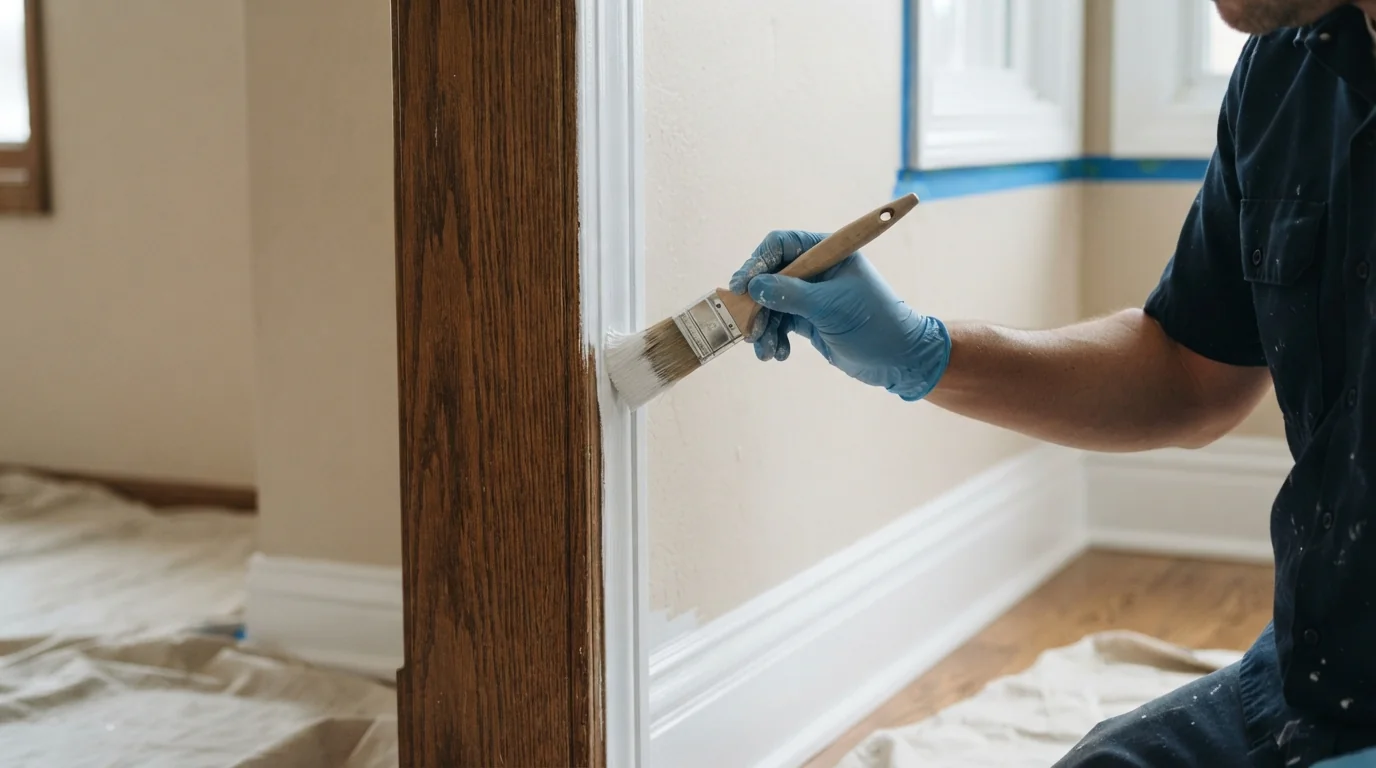
Converting stained oak trim to white is the single most common interior request we get in Naperville. The trim is cleaned, scuff-sanded to break the old clear coat, and primed with a stain-blocking primer; any knots or dark spots get a second spot coat. Every nail hole is filled, every gap to the wall caulked, and every miter joint that has opened is filled and sanded smooth. Two coats of enamel follow, sanded lightly between. The result looks like painted trim from a new build, not stained trim with paint on it.
Crown molding and casings
Crown molding and window and door casings are brushed and cut in by hand against the wall and ceiling, because the profiles do not spray well in an occupied room. The joints at inside corners of crown open and close with humidity, so they are caulked with a flexible acrylic before painting. Casings around windows often have water staining from condensation, which is sealed with a stain-blocking primer before the white goes on. We keep lines sharp at the wall so the trim reads as a clean, separate element.
Interior doors
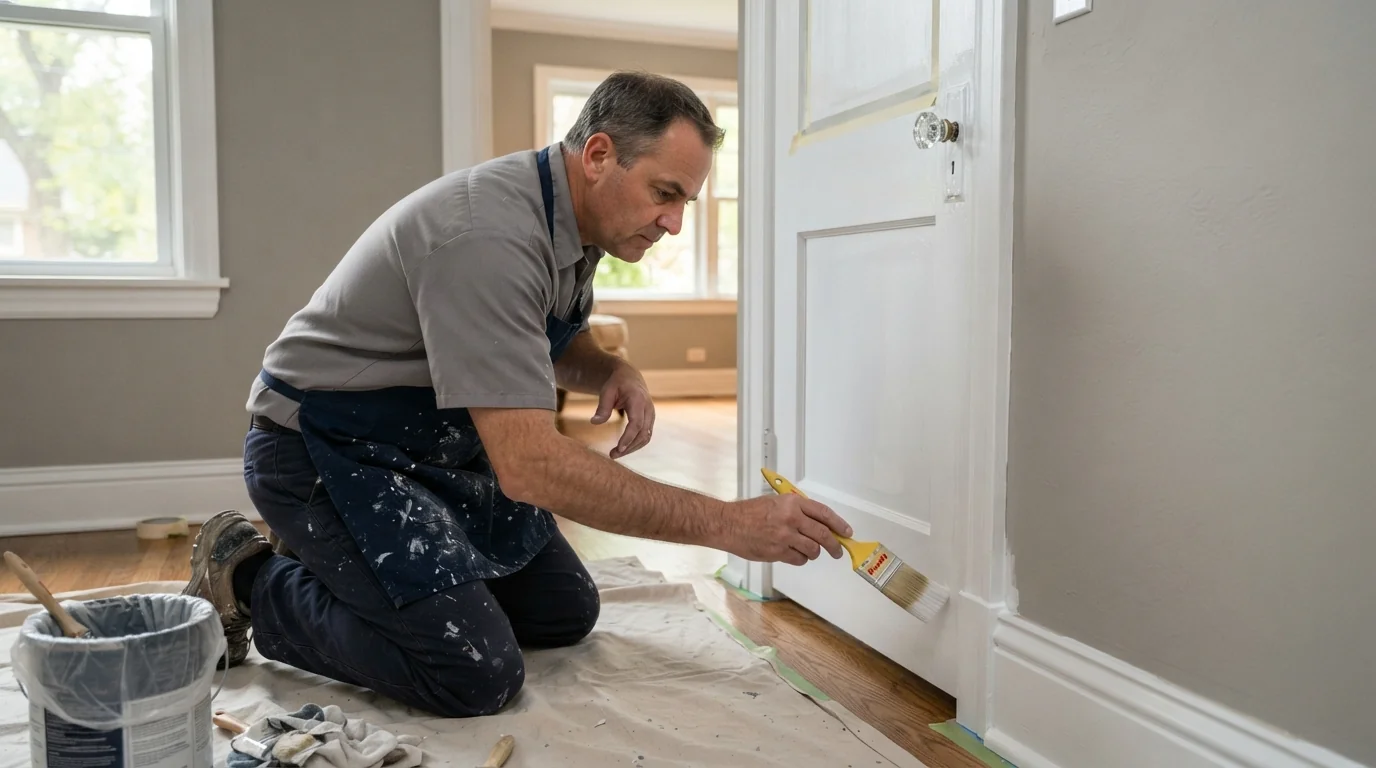
Interior doors are taken off their hinges, laid flat or hung in a spray rack, and sprayed on both sides for a smooth finish with no brush marks in the panels. Hinges and hardware are removed rather than taped. Hollow-core six-panel doors, solid doors and flat slab doors all take the same primer and enamel. Doors are rehung once cured, and any that rub or stick after years of paint build-up are planed at the edge. A house with fifteen to twenty doors is typically sprayed in two days.
Spray versus brush finish
Spraying gives the smoothest, most factory-like finish and is the right choice for doors, cabinets and trim in an empty house. In a lived-in home, baseboards and casings are usually brushed and rolled with an enamel that self-levels, because masking a whole furnished room for spray takes as long as painting it. We choose per surface: doors sprayed off their hinges, trim brushed in place, and the whole house sprayed only when it is empty between owners. Either way you get two full coats over a proper primer.
Choosing between the options
Which enamel for trim and doors
The trim enamel decides how the finish looks in five years. These are the three we choose between.
| Enamel | Levels and hardens | Yellowing over time | Best use |
|---|---|---|---|
| Waterborne alkyd | Excellent | Very little | Trim and doors in most homes |
| Urethane-modified acrylic | Very good | None | Doors and high-traffic baseboards |
| Oil-based enamel | Excellent | Yellows in low light | Rarely used now indoors |
What moves the price
What decides the cost of this job
Pricing comes from a walkthrough of the actual surfaces.
- Linear feet of trim. Baseboards, casings and crown measured room by room.
- Door count. Priced per door, both sides.
- Oak versus painted trim. Stained oak needs a stain-blocking primer and more coats.
- Grain filling. Filling oak grain adds a full prep step.
- Profile complexity. Crown and built-up casings take longer to cut in.
- Occupied or empty. Empty homes can be sprayed faster.
Local conditions
Trim, Baseboard & Door Painting around Naperville
Oak trim was the default in Naperville's 1980s and 1990s subdivisions, and much of it still wears its original honey stain under a builder-grade clear coat, which is why oak-to-white conversions dominate our interior calls here. Chicago-area cost guides note that older and more detailed homes need extra prep before painting, and that applies to trim even more than walls: every miter, nail hole and caulk line has to be right before the enamel will look clean.
What is included
Everything the estimate covers
- Stain-blocking primer on all oak
- Every nail hole filled
- Every trim-to-wall gap caulked
- Open miters filled and sanded
- Doors removed and sprayed both sides
- Hinges and hardware removed, not taped
- Two coats of trim enamel
- Doors rehung and adjusted
Step by step
How the job runs from the first call to the last coat
Walkthrough
Rooms, door count and the trim's current finish.
Protect
Floors covered, furniture pulled away from walls.
Clean and scuff
Old clear coat dulled so primer can bond.
Fill and caulk
Nail holes, miters and wall gaps.
Prime
Stain-blocking primer, spot-primed again on knots.
Two enamel coats
Sanded between coats for a smooth finish.
Rehang doors
Doors back on and adjusted once cured.
Want a real date for trim, baseboard & door painting?
Call (630) 389-8505 any hour. Tell us the rooms or the elevation and we will book the walkthrough.
Call (630) 389-8505Brands we apply
FAQ
Questions about trim, baseboard & door painting in Naperville
Slightly, as texture. If you want it perfectly smooth, we add a grain filler before priming.
Tannin bleed. A stain-blocking primer prevents it; latex primer alone does not.
We use waterborne alkyd or urethane-modified enamels. They level like oil but do not yellow and clean up with water.
Doors are rehung once dry to the touch but the enamel keeps curing for a couple of weeks; avoid heavy scuffing early on.
Often. If walls and trim are both being painted, the trim is done first and the walls cut in to it.
Yes. Furniture is pulled away from the walls and covered.
Book trim, baseboard & door painting in Naperville
One number, both offices, answered around the clock. The estimate is a walkthrough, not a guess.
Call (630) 389-8505Calls answered 24 hours a day, 7 days a week.